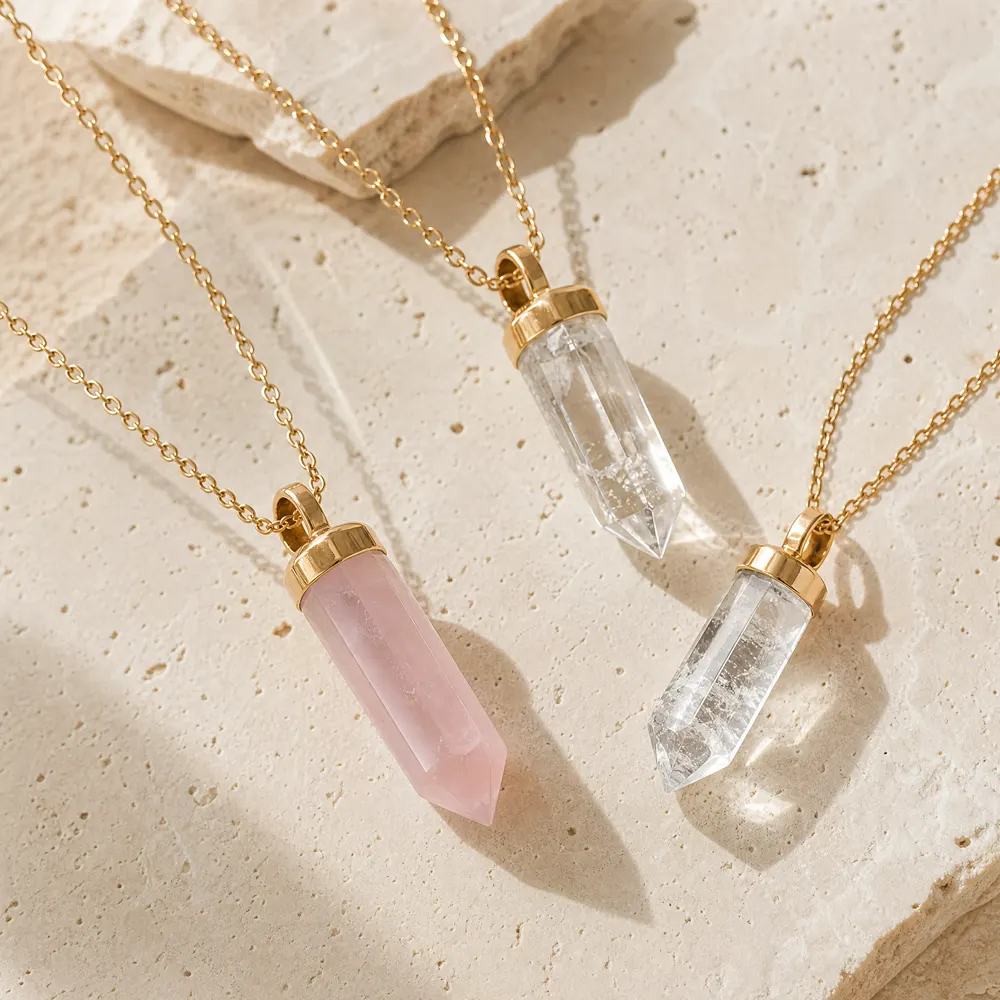
Answer first
Start with a market-by-market product truth file, then turn it into an Arabic-and-English content matrix tied to each sellable SKU. A strong Middle East crystal jewelry buyer brief answers five questions before creative copy begins: where will the item be sold; what exactly is every component; which descriptions and care statements are documented; what must appear in Arabic and English; and who approves the final listing, label artwork and sample against the record? Treat ‘crystal’ as a buyer-controlled material term rather than a sufficient identity. If the exact material, treatment, metal, plating, coating or care need is not documented, mark it as pending written confirmation and do not turn it into a consumer claim. The UAE is a useful reference point for a Gulf-facing brief: its Consumer Protection Law requires clear labelling, Arabic consumer data/advertising/contracts, and sufficient Arabic e-commerce information for covered providers. Requirements vary by destination and channel, so confirm the applicable rules with qualified advisers before launch. [1] [2]
## What decision must the buyer brief make before localization starts?
Open the brief with a one-page decision statement, not with trend language. Identify the destination country or countries, retail channel, customer-facing languages, launch window, and the specific product families under review. State the intended output: marketplace listing, own-site page, store ticket, campaign asset or a combination. Give every market-channel combination an owner and a status: proposed, pending documentation, approved for copy, or release-ready.
The buyer’s first practical question is: ‘What would make this SKU unacceptable to publish or sell in this channel?’ Capture those stop conditions upfront. Typical examples are an unverified material description, missing Arabic text where required, an identifier conflict, or an image that depicts a different variant. UAE law requires Arabic consumer data, advertising and contracts (with other languages permitted alongside), and clear, legible labelling. Use that as a prompt to check each destination’s rule set. This is operational guidance, not legal advice.
Buyer checklist
- Name each destination country, retail banner or marketplace, and sales channel.
- Define the release decision and the owner who can approve it.
- List the SKU families, variants and any excluded products.
- Record the customer-facing languages and required reading direction or layout constraints.
- Flag which requirements are confirmed, pending documentation, or need qualified legal or regulatory review.
## Which product facts belong in the SKU truth file?
Build one row for each sellable variation—not merely one row per style. A pendant in two colors, a bracelet in multiple sizes, or a set with separately sellable components needs a clear relationship to its parent style and its individual child SKU. The file should carry the buyer SKU, supplier reference if available, GTIN status, item name, category, dimensions, net weight if documented, visible components, color name, fastening, metal description, material description, care text, images, and evidence location. A factual field can be blank pending confirmation; it should never be filled with an attractive guess.
A stable identifier keeps localized text, photography and updates attached to the correct product. GS1 defines a GTIN as a way to uniquely identify trade items—products or services priced, ordered or invoiced in the supply chain. Ask whether the channel requires a GTIN and whether the variation needs a new identifier under GS1 rules. Do not create, reuse or print an identifier from an unverified spreadsheet. Keep the buyer SKU and approved GTIN as separate fields.
| Field group | Buyer decision | Minimum evidence or control |
|---|---|---|
| Identity | Is this a distinct sellable variation? | Buyer SKU; parent style; approved image reference |
| Composition | What may be named in consumer copy? | Written material/component documentation and approved sample review |
| Commerce data | How will the item be ordered and reconciled? | Channel-ready SKU; GTIN status if applicable; revision owner |
| Care and warnings | What instructions are appropriate to publish? | Documented care or risk information; market review where required |
Buyer checklist
- Require a sellable-SKU row and a parent-style relationship for every variation.
- Separate documented facts from marketing copy and from pending questions.
- Attach an image reference that shows the same color, size and component configuration as the row.
- Store the source document, revision date and evidence owner for each material-sensitive field.
- Confirm identifier ownership and channel requirements before publishing barcode data.
## How should Arabic and English product information be planned?
Specify a content matrix rather than requesting a translation at the end. For each SKU, separate mandatory product facts from optional merchandising modules: short title, category breadcrumb, material line, size or length, color, care, price-facing descriptor, long description, image alt text, search terms, and any warning or disclosure. Mark the source-of-truth field for every module. The Arabic text should be created or reviewed by a qualified native-language resource familiar with the retailer’s terminology and target market; it should not be back-filled mechanically from English after artwork or pages are locked.
Control claims at sentence level. Use documented, observable description—shape, color, component type, fastening or stated material—rather than unsupported quality, provenance or performance language. Do not use health, healing, medical or wellness outcome, medical, spiritual, energy or feng-shui claims. Do not translate a broad English word like ‘crystal’ into a more specific Arabic material claim without technical support. UAE law is a useful reference: covered e-commerce providers must provide sufficient Arabic commodity information and specifications. Confirm what applies with qualified advisers and destination stakeholders.
Buyer checklist
- Create Arabic and English columns for every customer-facing content module.
- Label each module as factual, merchandising, required disclosure, or prohibited/pending claim.
- Test Arabic text in its final layout for legibility, truncation and correct SKU linkage.
- Keep the original approved source text and translation revision together.
- Escalate wording that implies composition, durability, origin, treatment or performance without documentation.
## How should the brief distinguish crystal, glass and gemstone language?
Do not allow the word ‘crystal’ to do all the technical work. It may be a category, a consumer-facing design word, or part of a material description, but the buyer should ask what the component is and what evidence supports the answer. CIBJO’s Gemstone Book identifies lead glass as artificially produced glass with a distinct high lead-oxide content and notes that it is often called ‘crystal glass’ or ‘lead crystal glass’. That does not make every item marketed as crystal a lead-glass product; it is a reason to request exact documentation before choosing a precise description.
The safest editorial route is to match wording to the approved record. If documentation identifies a glass component, say glass or crystal glass only where supported. If it identifies a natural gemstone, use the documented gemstone name and carry any relevant treatment and care disclosure through the product page and commercial documents as applicable. CIBJO’s voluntary standards recommend informing purchasers about gemstone treatments and associated special-care requirements; its nomenclature is a useful discipline for transparent copy, not a substitute for destination law or formal verification. Where material identity is unresolved, use an internal hold rather than an invented consumer label.
| Documented position | Suitable brief instruction | Do not assume |
|---|---|---|
| Exact glass or crystal-glass wording documented | Use the approved material term and documented care copy. | That it is a natural gemstone or has a particular formulation beyond the record. |
| Natural gemstone name and relevant information documented | Use the documented gem name; carry approved disclosure and care fields. | Origin, treatment status, certification or laboratory result unless supplied in written documentation. |
| Material not yet documented | Hold the material claim; request written clarification and sample review. | That a trade, color or visual name establishes material identity. |
Buyer checklist
- Ask for the exact name and composition category of each prominent stone or decorative component.
- Record whether any treatment, coating, plating or special-care information is documented.
- Do not equate ‘crystal’ with a natural gemstone, a named mineral, or a specific glass formulation without evidence.
- Use the same approved material wording in listing, label copy and invoice-facing data where applicable.
- Route ambiguous terms to the technical, compliance or qualified-adviser review path.
## How can buyers turn local relevance into a controlled assortment review?
Make assortment localization a selection exercise, not a cultural stereotype. Ask the buying team which occasions, gift missions, price architecture, color stories, silhouettes and retail environments the range is intended to address, then record the answer as a testable hypothesis. Segment the review by customer mission—for example, everyday self-purchase, gifting, event dressing or travel retail—only where the retailer’s own insight supports it. Build a small proposed core, a clearly marked test group, and a list of excluded designs with reasons. The objective is a decision trail that merchants, content teams and sourcing partners can inspect.
For every retained SKU, decide whether localization changes copy, assortment role, imagery or size information. Local relevance should never add material or cultural claims without evidence. Review color rendering, skin-tone representation and styling context, but mark imagery as editorial direction until the correct product sample and rights-cleared assets are approved. The brief should not promise availability, capacity, lead time, price, minimum order quantity or delivery; those belong in a separate written quotation or agreement if offered.
Buyer checklist
- Group candidate SKUs by a buyer-defined customer mission and channel.
- State the reason for inclusion, test status or exclusion for each style family.
- Identify any variant whose size, color or imagery needs destination review.
- Separate editorial styling direction from verified product facts.
- Keep commercial assumptions outside the localization brief unless confirmed in a written quotation.
## What approval path prevents a polished but unreliable launch file?
Set a release gate that compares the final customer-facing asset to the SKU truth file and the approved sample. The copy lead checks language; the merchandiser checks sellable variation and assortment role; the data owner checks identifiers and feed fields; and the compliance or legal reviewer checks applicable requirements and escalated claims. This is more effective than a single late sign-off because it detects mismatches such as a gold-tone image paired with a silver-tone record, a translated material claim that exceeds evidence, or a description inherited from a related style.
Version control matters as much as review. Give the brief a version number, market/channel label, date, owner and change log. A changed component, image, material statement, care instruction or language string should reopen review. Retain the documentation reference and approval record with final text and asset. Before sale, check applicable destination, platform, customs and consumer-protection requirements with qualified advisers; this is a buyer workflow, not legal, regulatory or technical advice.
Buyer checklist
- Match every final product page, label or asset to the exact child SKU and approved sample.
- Confirm Arabic and English text against the approved content matrix, not against informal messages.
- Verify material wording, disclosures, care and warnings against written documentation.
- Reconcile identifiers, images, color names and dimensions before upload or print approval.
- Record market/channel, version, date, approver and unresolved exceptions.
- Reopen review when a component, claim, image, translation or destination changes.
- Obtain qualified review of applicable local and channel requirements before release.
Frequently asked questions
Should a Gulf-facing listing always be bilingual?+
Plan Arabic and English from the start, but confirm the requirements for the exact country, channel and product presentation. The UAE Consumer Protection Law provides a clear reference: consumer data, advertising and contracts must be in Arabic, with other languages allowed alongside Arabic. A marketplace or retailer may add its own rules. Have qualified advisers confirm the applicable requirements rather than treating a regional norm as a universal legal conclusion.
Can we call all faceted decorative components ‘crystal’?+
No. Request and retain the documented identity of each significant component. ‘Crystal’ can be a broad merchandising term and may not establish whether a component is glass, crystal glass, a natural gemstone or another material. Use only wording supported by the product record, and hold a consumer-facing material claim if the documentation is incomplete.
What is the minimum information needed before a product page can be localized?+
At minimum, have a sellable SKU, correct variation and image, documented component wording, size basis where relevant, approved care or warning text if applicable, an Arabic-and-English content matrix, and a named approver. Confirm required identifier status and ownership before publishing.
Who should approve the final brief?+
Use a role-based approval: merchandising validates the assortment role; product or sourcing validates the evidence record and approved sample; content validates the language; data operations validates SKU and identifier mapping; and compliance or qualified advisers review applicable requirements and escalated claims. One accountable owner should issue the final version and maintain the change log.
Conclusion
A credible Middle East crystal jewelry buyer brief converts uncertainty into explicit decisions: which market and channel, which SKU facts, which Arabic and English copy, which material terms, and which release approvals. Start with documented product truth, treat ambiguous ‘crystal’ language as a review point, and keep localization, assortment choice and compliance review traceable. Commercial and technical points that remain unknown should stay subject to written documentation, applicable requirements and approved sample review.
Product category references
Explore relevant GemMira formats.
Next step
Move from general guidance to your specific brief.
For a GemMira wholesale, private-label, or custom inquiry, share the product category, market, material direction, and any available reference images. Commercial terms, final specifications, and sample options are confirmed in a quotation and approved pre-production sample. Email your requirements to info@gemmira.com.
Start an inquiry with this guide →Email info@gemmira.com