Answer first
For an EU-targeted crystal jewelry offer, a buyer should confirm that the online listing can show the manufacturer contact details; where the manufacturer is outside the Union, the EU responsible person's details; a product identifier and image; and applicable warnings or safety information. That is the minimum distance-sale product information specifically set out in Article 19 of the EU General Product Safety Regulation, alongside the wider requirement that only safe products are made available on the market. The listing also needs to work with the consumer journey. Before a consumer is bound, distance-selling rules require clear information about the goods, trader identity and contact details, total price and relevant charges, payment and delivery arrangements, complaint handling, and withdrawal information where it applies. Treat these as separate but connected release gates. This is a practical sourcing guide, not legal advice; confirm country-specific requirements and seek qualified advice before launch. [1] [2]
What counts as an EU-targeted distance-sale offer?
Start with the market the offer addresses, not the location of the website operator. Under the GPSR, a product offered online or by another distance-sales method is deemed made available on the market when the offer targets consumers in the Union. A global brand, marketplace seller or importer should therefore map each storefront, language version, currency, advertising audience and destination setting that directs activity to one or more EU Member States.
For a buyer, the useful decision is whether the SKU will be exposed to EU consumers, rather than whether it was sourced through an EU entity. If the answer is yes, open a product-information record before creative production begins. Assign one owner for the product data, one for the online listing, and one for legal or regulatory escalation. Do not assume an internal wholesale data sheet is sufficient for a consumer-facing offer.
Buyer checklist
- Which EU Member States, if any, is the offer directed to?
- Which entity is the retailer or trader shown to the consumer?
- Is the product record tied to a stable SKU, model or batch reference?
- Are marketplace and direct-site listings governed by the same approved data set?
Which product details must be visible in an online jewelry offer?
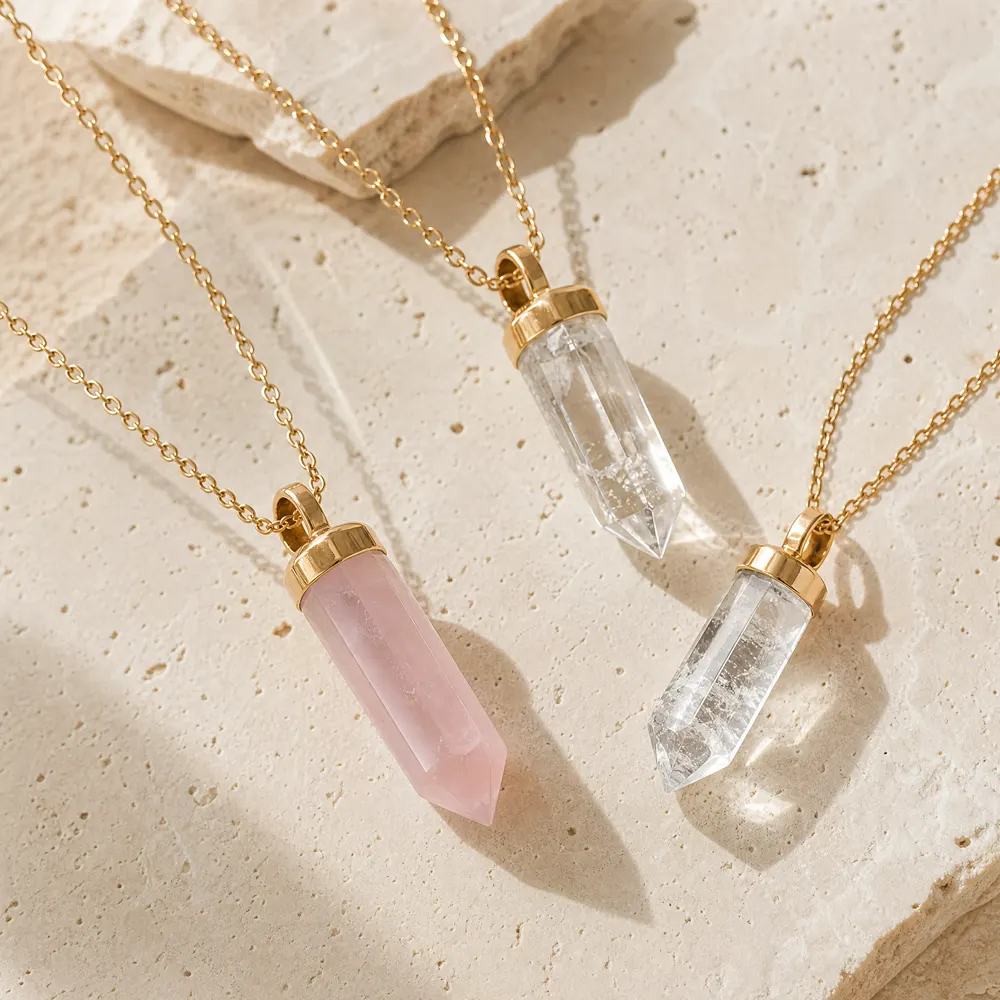
Build the product-detail page around visible, retrievable fields rather than a generic compliance statement. GPSR Article 19 calls for the manufacturer's name, registered trade name or registered trade mark and postal and electronic contact address. If the manufacturer is not established in the Union, the offer must instead also present the name and postal and electronic address of the responsible person in the Union. The offer must also give information identifying the product, including a picture, type and another product identifier, plus applicable warnings or safety information.
Ask to see the exact text and identifiers that will appear online, then compare them to the approved sample, supporting records and on-product or packaging information. The image should make the offered design intelligible; the product identifier should enable the buyer, customer service team and a marketplace to distinguish that exact variant. Do not compress a multi-variant family into a single vague description if metal finish, component, size or included item changes the information the consumer receives.
| Buyer situation | Information to confirm before publication | Release decision |
|---|---|---|
| Manufacturer established in the EU | Manufacturer identity, postal and electronic address; product image, type and identifier; applicable warnings | Publish only after the visible fields match the approved record |
| Manufacturer outside the EU | All standard product fields plus the EU responsible person's name, postal and electronic address | Hold the EU-targeted offer until responsible-person details are confirmed |
| One listing covers several variants | Variant-level identifier, image and any variant-specific material or warning information | Split variants or use a selection-controlled content block if information differs |
| Marketplace listing | The marketplace-ready fields and a process to keep them aligned with the controlled product record | Confirm the display route before the SKU is submitted |
Buyer checklist
- Manufacturer name or registered brand and postal and electronic contact address are approved for display.
- Where relevant, the EU responsible person details are confirmed for the offer.
- Each sellable variant has a product type, clear image and unique identifying reference.
- Applicable warning or safety copy is available in the required consumer language or languages.
- The published content matches the current approved product, packaging and documentation.
How should buyers define crystal jewelry accurately enough for e-commerce?
A consumer-facing crystal jewelry description should describe what is known and documentable, not what looks attractive in a draft. Confirm the product category, component construction, metal or base-material description, plating or coating description if applicable, stone or crystal descriptor, colour descriptor, dimensions or size basis, fastening type and the contents supplied. Use an approved sample and written supplier documentation to reconcile this information. If a specification is unknown or changes by variant, keep it out of the claim set until it is resolved.
Separate visual descriptors from statements that could be read as a material, origin, treatment, durability or performance claim. For example, a buyer should not allow natural, precious, hypoallergenic, nickel-free, plated-to-a-specific-standard, hand-finished, laboratory-tested or origin statements unless the applicable written evidence supports the exact wording and SKU. Never convert a trade nickname into a mineralogical or provenance claim by assumption. Build short consumer copy from the controlled specification rather than asking a copywriter to infer details from photographs.
Buyer checklist
- What exactly does the crystal or stone descriptor mean for this SKU?
- Which components and finishes are visible to or contact the wearer?
- Are size, length, weight or dimensions expressed with a stated measurement basis?
- Which claims have written evidence linked to the specific product reference?
- Has the approved sample been checked against the final copy and images?
What safety and material questions belong in the buyer file?
The GPSR safety assessment considers, among other things, a product's design, composition, packaging, instructions, presentation, labelling and warnings, as well as the consumer categories using it. For jewelry, that means the information file should make it possible to assess foreseeable use and foreseeable misuse: small detachable elements, sharp edges, breakage-prone components, magnetic parts, cords or chains, and age-suitability considerations where relevant. A generic statement that a product is safe is not a substitute for product-specific information and applicable supporting documentation.
Material due diligence should be proportionate and specific. Ask which material declarations, restriction assessments, reports or other documentation apply to the exact item and components, and who controls change notification. EU chemical restrictions can be relevant to jewelry and components, but the applicable rules and evidence depend on the materials, product and market. Retain the documentation route and escalate gaps to qualified compliance advisers; do not advertise compliance, testing or allergy-related benefits merely because a document has been requested.
Buyer checklist
- Does the file identify foreseeable risks and any required warning or instruction?
- Is age suitability considered where the design or components make it relevant?
- Are material and finish declarations tied to the sellable SKU or component version?
- Who must approve a component, plating, adhesive, clasp or packaging change?
- Can the retailer retrieve the supporting record if a marketplace or authority asks?
Which consumer-contract disclosures sit beside product information?
Product identification does not replace pre-contract information. EU consumer-rights rules for distance contracts call for clear and comprehensible information before the consumer is bound, including the main characteristics of the goods, trader identity and contact details, total price including taxes and applicable charges, payment and delivery arrangements, the delivery time undertaken, and complaint-handling information where applicable. The operational result is that the product page, cart and checkout need a coordinated content plan rather than isolated compliance widgets.
Confirm where the customer can see withdrawal conditions, time limits and procedures, the model withdrawal form, return-cost information where applicable, the legal guarantee reminder and any applicable commercial-guarantee or after-sales terms. Keep contractual statements distinguishable from product claims. A buyer should request the final consumer journey for review in the relevant market language and screen size, including the order button area, not only a desktop product-page screenshot. Requirements may vary by Member State and sales model, so obtain qualified advice for the launch market.
Buyer checklist
- Are main characteristics consistent across product page, cart, checkout and confirmation?
- Can the customer see the total price and applicable charges before placing the order?
- Are trader identity, contact route, complaint route and applicable withdrawal information accessible?
- Does the order flow make the payment obligation clear?
How can a buyer turn this into a repeatable content-release workflow?
Use a one-SKU evidence-to-copy matrix. In the left column, list each claim, identifier, image, safety message and contract disclosure. In the next columns, record the source document, document date or version, responsible owner, markets and languages, variant applicability, approval status and the online location where it will appear. This gives brand, sourcing, legal, marketplace and customer-service teams a common handoff rather than multiple untracked spreadsheets.
Set release rules that are practical: no EU-targeted listing without the Article 19 fields; no material, provenance, treatment, performance, health or sustainability claim without approved support; no variant substitution without a data review; and no translation that changes the technical meaning. Keep a controlled archive of page captures and final approved copy with the SKU record. This is an internal governance measure, not proof that any particular product or supplier meets a requirement.
Buyer checklist
- Create one controlled record for every online sellable SKU and variant.
- Link each visible claim to a written source or mark it unavailable.
- Confirm the manufacturer and, where relevant, EU responsible-person listing fields.
- Approve images against the final physical sample and product identifier.
- Review safety messages and language requirements for each target Member State.
- Test product-page, cart and checkout consistency before go-live.
- Define a change-control trigger for materials, components, copy and images.
- Archive the approved content and escalation decisions with the SKU record.
Frequently asked questions
Is a beautiful product image enough for an EU online crystal jewelry listing?+
No. An image is only one part of the product-identification information. For EU-targeted distance sales, buyers should also confirm the relevant manufacturer and, where applicable, EU responsible-person contact details, a product type and identifier, plus applicable warnings or safety information. The wider consumer journey also needs pre-contract information.
Can one compliance statement cover every color and finish variant?+
Only if the underlying product information is genuinely identical and the approved documentation supports that conclusion. Where a variant changes components, finish, size, warning, image or material descriptor, maintain variant-level control. A broad statement should never hide an unresolved difference.
Should a buyer describe a crystal as natural, treated or laboratory-tested?+
Use none of those descriptors by assumption. Confirm the exact term, scope and evidence in written documentation linked to the product, then obtain appropriate review for the intended market and claim. If evidence is incomplete, use a more limited, accurate description or hold the claim.
Does this guide replace country-specific legal review?+
No. It is a B2B content-control framework, not legal advice. EU rules may interact with Member State language, consumer, marking, chemical, tax and other requirements. Confirm the applicable requirements and use qualified legal and compliance advisers for the markets and sales model involved.
Conclusion
For European crystal jewelry distance-selling information, the buyer's core task is to turn product evidence into accurate, visible and variant-controlled consumer content. Confirm GPSR online-offer fields, truthful technical descriptors, applicable safety information and the connected distance-contract journey before release. Where information is unknown, obtain written documentation, a written quotation where relevant, and an approved sample rather than filling the gap with a claim.
Product category references
Explore relevant GemMira formats.
Next step
Move from general guidance to your specific brief.
For a GemMira wholesale, private-label, or custom inquiry, share the product category, market, material direction, and any available reference images. Commercial terms, final specifications, and sample options are confirmed in a quotation and approved pre-production sample. Email your requirements to info@gemmira.com.
Start an inquiry with this guide →Email info@gemmira.com