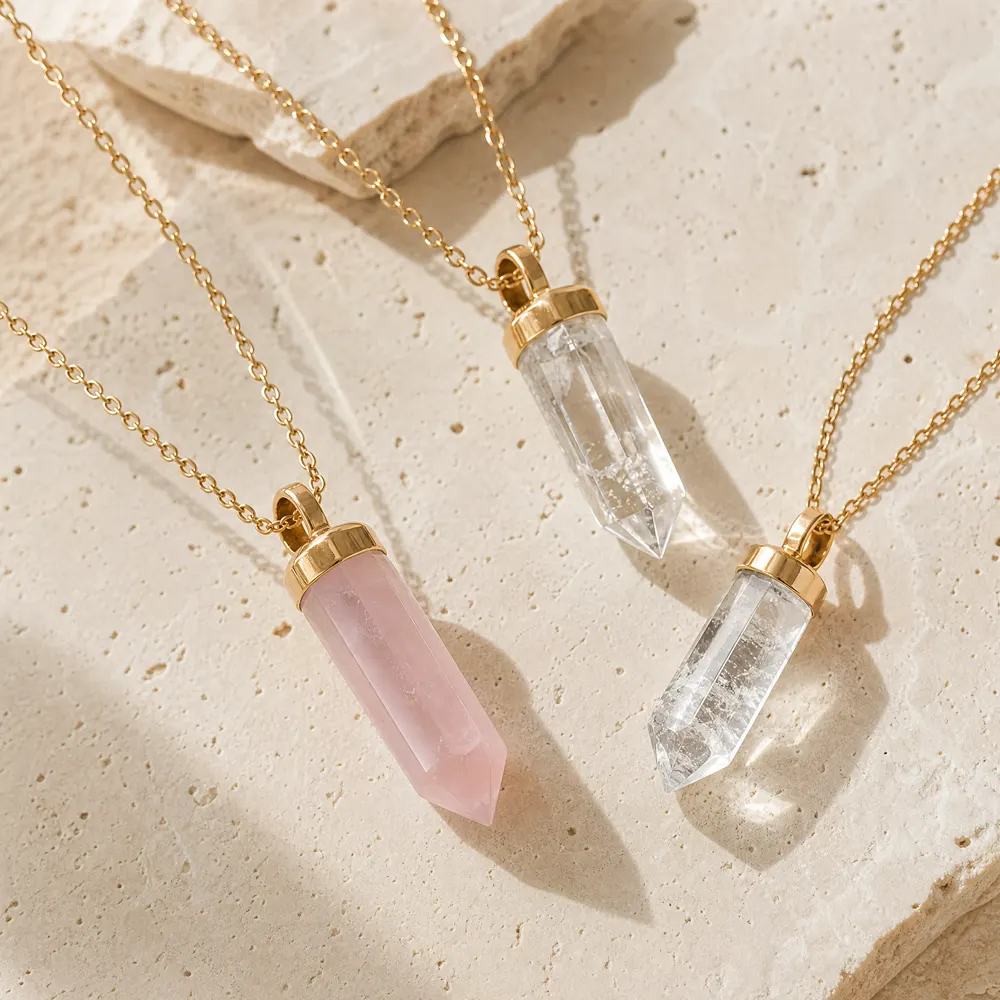
Answer first
Coordinate North American crystal jewelry content by creating one SKU-level source record before copy is written. Confirm what “crystal” means for that item, preserve supplier documentation and approved-sample observations, record any treatment or special-care condition, then use controlled fields to feed product pages, marketplace attributes, care cards and retailer sheets. Do not let evocative sales copy substitute for material identification. For U.S. listings, the FTC Jewelry Guides say disclosures for qualifying gemstone treatments should appear in the online solicitation or product description; for Canadian listings, information and any precious-metal quality mark should be accurate and meaningful. Requirements vary by product and channel, so buyers should check applicable requirements and qualified advisers before release. [1] [2]
What should a North American crystal jewelry content brief contain?
Start with a SKU-level content brief, not a mood board or a generic collection description. In jewelry, “crystal” can be a shopper-facing term with several possible material meanings. A buyer should therefore ask what the component actually is, which component the statement covers, and what written evidence supports it. The brief should distinguish the central decorative component from accent stones, beads, coatings, findings, plating and base metal.
The practical objective is a single source of truth that every downstream team can use. Merchandising needs sellable attributes, ecommerce needs searchable product facts, legal or compliance reviewers need claims evidence, and customer-care teams need care notes that do not overreach. Keep unknowns visibly blank or marked “pending written confirmation”; never fill them with a likely-sounding gemstone name, treatment assumption or origin claim. This gives the buyer a clean escalation path before a listing goes live.
Buyer checklist
- Assign an internal SKU or style reference and an approved sample reference.
- Separate decorative component, metal, coating/plating, settings and non-jewelry parts.
- Capture the supplier’s material description verbatim, with its document date.
- Record which claims are approved, unsupported, pending or prohibited.
- Give one owner responsibility for final content release.
How should buyers describe “crystal” without creating a material mismatch?
Use the narrowest accurate term supported by item documentation. “Crystal” may mean a named mined gemstone, laboratory-created material, imitation, simulated material, glass-based component or another manufactured component. If a named gemstone is used, make sure the evidence supports it. The FTC Jewelry Guides say that a named stone, or terms such as “gemstone,” used for laboratory-created or imitation material must be immediately and equally conspicuously qualified so shoppers understand it is not mined. “Faux” alone is not an adequate disclosure under those Guides.
Keep titles scannable, but place material precision where shoppers see it before purchase: the primary description and material/specification field. Do not let imagery, a collection name or an unqualified search term contradict the material line. A color descriptor may be useful, but it cannot turn a crystal-colored component into a claim about a specific mined stone. Keep supplier wording in the evidence file while publishing only internally approved wording.
| Documented component status | Safer content approach | Buyer release question |
|---|---|---|
| Named mined gemstone documented | Use the accurate stone name; retain evidence and verify each added attribute. | Does the evidence support the exact name and attributes? |
| Laboratory-created material | Use a clear adjacent qualifier with the stone name, subject to review. | Is the qualifier equally conspicuous wherever needed? |
| Imitation, simulated, glass or other manufactured component | Describe the actual category clearly; do not imply a mined gemstone. | Would a shopper understand it is not mined before purchase? |
| Status unconfirmed | Use a neutral working description or hold publication pending written confirmation. | What record or sample review closes the gap? |
Buyer checklist
- Confirm whether “crystal” means a named mineral, laboratory-created material, glass or another manufactured component.
- Use a named gemstone only with documentation that supports it.
- Put a necessary qualifier directly beside the named material.
- Check titles, attributes, images, alt text and search terms for contradictions.
- Avoid unqualified “natural,” “genuine,” “real” or “precious” wording for manufactured material.
When do care instructions and treatment disclosures need to be connected?
Treat care copy as a product attribute linked to material and treatment evidence, not generic lifestyle text. The FTC Jewelry Guides say treatment disclosure is needed when a gemstone treatment is not permanent, creates special-care requirements or significantly affects value. When a product can be bought without personal viewing, the Guides say disclosure should appear in the solicitation or description. Care and disclosure therefore belong in the same digital-release decision.
Keep care language tied to documented construction. GIA says many colored gems can be cleaned with warm water, mild dish soap and a soft brush, but warns that treatments may be affected by heat, solvents, steam and ultrasonic cleaning. Do not convert general guidance into an item-specific guarantee. If material, treatment, adhesive, plating or setting behavior is undocumented, use cautious interim wording, seek written guidance, or omit detailed cleaning claims.
Buyer checklist
- Obtain written treatment and special-care information for the actual component where available.
- Link each disclosed treatment to any necessary customer-facing care instruction.
- Review whether online product copy presents the disclosure before purchase.
- Avoid universal ultrasonic, steam, chemical or heat-cleaning recommendations.
- Ensure care-card language matches the live product page and marketplace feed.
How should U.S. and Canadian listing information be coordinated?
Build one core product record, then apply market and retailer rules as controlled overlays. In the United States, the FTC Jewelry Guides address deceptive jewelry representations, including treatment disclosure and terminology for mined, laboratory-created and imitation materials. They do not replace channel specifications or professional legal review. Map each U.S. channel’s required fields, prohibited wording, image rules and disclosure placement to the same approved evidence set instead of editing separately in each portal.
For Canada, accuracy and meaningfulness should be the baseline. The Competition Bureau says prepackaged non-food consumer products must be labelled with accurate, meaningful information before sale, and a precious-metal quality mark, if applied, must be truthful and used as prescribed. Confirm applicable federal, provincial, retailer and language requirements with qualified advisers. Do not infer a “Made in Canada,” origin, metal-quality or bilingual claim from a component source or draft label.
| Content control | U.S. release focus | Canada release focus |
|---|---|---|
| Gemstone identity | Use clear, non-deceptive terminology and necessary adjacent qualifiers. | Use accurate, meaningful information; validate channel and applicable rules. |
| Treatment and care | Put applicable disclosures in an online solicitation or description. | Keep statements accurate; confirm requirements and retailer policies. |
| Precious-metal statement | Validate every claim against evidence and channel requirements. | Check any quality mark is truthful and used as prescribed. |
| Localization | Use approved English copy and channel field formatting. | Plan language and label review before translation or launch. |
Buyer checklist
- Create a U.S. and Canada field map for every retail channel.
- Identify which fields are consumer-visible before purchase and which are back-end attributes.
- Compare precious-metal descriptions and marks with approved documentation.
- Escalate origin, environmental, health, medical or wellness outcome and durability claims for evidence review.
- Confirm applicable Canadian language and labelling requirements before publishing.
What buyer checklist prevents late listing changes?
Run a content-readiness gate before photography, feed setup or retailer upload. Test evidence, wording and placement—not simply whether a description exists. Assign reviewers from buying or sourcing, product/compliance, ecommerce and the receiving brand team. If the approved sample conflicts with written documentation, stop and resolve the discrepancy; content staff should not choose the more appealing version.
The gate also protects syndicated listings. One missing qualifier can spread through advertising feeds, reseller data and translated pages. Lock approved snippets for the material line, treatment disclosure and care note, and maintain version history. That lets a buyer identify what changed, why it changed and where corrected copy must be republished. It is an operating control, not a statement that any product meets a legal standard.
Buyer checklist
- Match SKU, component count, color/finish and visible construction to the approved sample.
- Verify material terminology against current written supplier documentation.
- Record whether treatment is documented, unknown or needs disclosure review.
- Approve item-specific care copy or remove unsupported detail.
- Check agreement across title, description, bullets, specifications, alt text and feeds.
- Review natural, genuine, laboratory-created, simulated, glass, plated and hypoallergenic terms for evidence.
- Record approval date, version, owner, evidence location and channels.
- Escalate unresolved wording to qualified legal or compliance advisers before release.
Which listing modules make product content easier to govern?
Design the product page as modules with different evidence standards. A concise title identifies the product type and an approved material descriptor. A specification block carries fields needing precision: component material, documented metal or finish, approved measurements, and treatment or special-care wording where applicable. Narrative copy may explain visual design, but should not introduce claims absent from the approved facts block.
Separate care and disclosure modules so neither is buried. Put a short shopper-relevant statement in the purchase path and keep approved detail in a care accordion or guide. Do not make health, healing, medical or wellness outcome, medical, spiritual, energy or feng-shui efficacy claims. If a retailer requests benefit language beyond the evidence file, return to the buyer brief for written approval instead of improvising.
| Listing module | What it should answer | Evidence control |
|---|---|---|
| Title | What is the item and its essential approved material descriptor? | Use a controlled template; no unverified material, origin or treatment claim. |
| Specifications | What materials and measurable attributes are documented? | Use SKU evidence and approved-sample checks. |
| Description | How does the design look or wear? | Do not contradict facts or add unsupported implications. |
| Care/disclosure | What should the purchaser know before and during ownership? | Use material/treatment evidence and review placement. |
| Images and alt text | Do images and accessibility text match the item? | Check captions, filenames and overlays for unsupported terminology. |
Buyer checklist
- Use a controlled title template with only approved material terminology.
- Make material, treatment and care fields reusable across product pages and feeds.
- Reserve descriptive adjectives for visible design characteristics, not unverified material properties.
- Place mandatory or important qualifications where the shopper encounters the related claim.
- Add an internal evidence ID to content records, not necessarily to consumer-facing copy.
How can teams keep listings accurate after launch?
Treat the approved product record as a living controlled document. A change to component material, construction, documented treatment information, metal statement, imagery or care instruction should trigger a content-impact review before republication. Identify every destination using the field: brand site, retailer portal, data feed, printed insert, catalogue and distributor sheet. Do not assume a corrected master page updates third-party marketplaces.
When evidence is incomplete, narrow the claim, mark it pending internally, or pause the affected content until documentation and sample are reconciled. Archive prior versions and the reason for change. This is useful for North American crystal jewelry listing content because precise terminology and disclosure placement can be reused widely. It also gives sourcing partners a targeted evidence request rather than an open-ended demand for more details.
Buyer checklist
- Set change triggers for material, treatment, construction, imagery and care updates.
- Maintain a destination list for every syndicated product field.
- Timestamp source documents and associate them with the relevant SKU/version.
- Run periodic spot checks of live consumer-facing content against the approved record.
- Document corrections and obtain renewed approval when a substantive claim changes.
Frequently asked questions
Can a buyer use “crystal” as the only material description?+
Only if that wording is accurate for the item and meets the applicable channel’s information needs. Because shoppers may understand “crystal” differently, the buyer should obtain written material confirmation and add a precise, approved descriptor where necessary. Do not use “crystal” to imply a named mined gemstone without support.
Where should a treatment disclosure appear on an ecommerce listing?+
Place it in a consumer-visible product solicitation or description before purchase when applicable, and keep it linked to the related material claim and care instruction. The FTC Jewelry Guides specifically address disclosures for products sold without personal viewing. Check applicable requirements, retailer rules and qualified advisers for the final implementation.
May one generic jewelry-care paragraph be reused across a collection?+
Use a generic baseline only after confirming that it does not conflict with any documented material, treatment, adhesive, plating or setting-specific needs. GIA notes that care can vary and that some treatments and materials should not be exposed to ultrasonic cleaning, heat, solvents or steam. Item-specific documented care should override generic copy.
What should happen when supplier wording and the approved sample do not match?+
Pause the disputed claim, retain both records and request written clarification tied to the SKU or sample. Do not let a content team choose a material identity, treatment status, origin or performance claim on appearance alone. Release only wording supported by the reconciled documentation, applicable requirements and internal approval.
Conclusion
The most reliable route to consistent North American crystal jewelry listings is to control claims at SKU level: verify the component description, connect documented treatment information to care wording, localize only after the core facts are approved, and keep every channel tied to the same versioned evidence record. When facts are unknown, narrow or pause the claim and seek written confirmation and qualified review rather than guessing.
Product category references
Explore relevant GemMira formats.
Next step
Move from general guidance to your specific brief.
For a GemMira wholesale, private-label, or custom inquiry, share the product category, market, material direction, and any available reference images. Commercial terms, final specifications, and sample options are confirmed in a quotation and approved pre-production sample. Email your requirements to info@gemmira.com.
Start an inquiry with this guide →Email info@gemmira.com