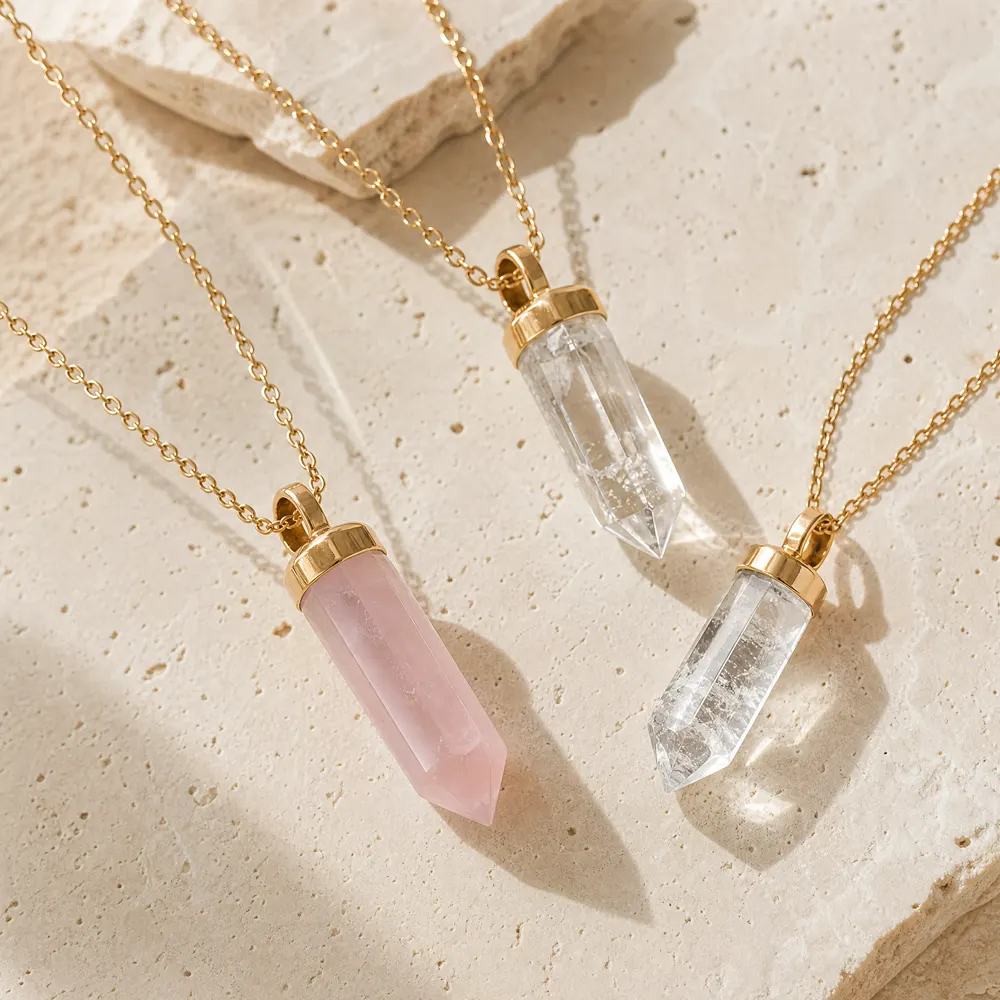
Answer first
Independent retailers can plan a credible crystal jewelry holiday assortment by treating availability as an evidence status—not a mood board promise. Start with a narrow, tiered range and a dated assortment brief. Then label every proposed SKU as planned, quoted, sample-approved, or confirmed for the specific order only when the corresponding written evidence exists. Do not turn a product image, prior-season item, broad catalogue, or verbal indication into a stock, replenishment, delivery, origin, treatment, or certification claim. The practical goal is not to predict every commercial variable. It is to build a range that can contract or expand without misleading store teams, online shoppers, or internal stakeholders. Ask a supplier or sourcing partner for a written quotation and supporting product documentation for the exact configuration under consideration; compare those records with an approved sample and the claims your channel intends to publish. Where details remain unknown, keep the language conditional and check applicable market requirements with qualified advisers. [1] [2]
## 1. Define ‘crystal’ before you plan the holiday range
The word ‘crystal’ can describe very different merchandise: natural crystalline mineral material, quartz sold under a crystal description, glass crystal, or a decorative component with a trade name. Those categories may look similar in a campaign image, but they should not share an unqualified product description. A holiday brief should first record the material description intended for each family—pendant, earring, bracelet, ring or charm—and identify which part of the item the description refers to. This avoids the common error of presenting a glass component as a gemstone, or assuming that a generic ‘crystal’ label answers questions about the whole item.
Build the assortment from a controlled attribute list rather than from aesthetic photos alone. For each proposed item, capture the intended material wording, metal or base-material wording if relevant, colourway, silhouette, component count, target retail role, and proposed claim language. Ask: ‘What exactly is the material statement we can substantiate for this configuration?’ and ‘Does the product image show the same configuration as the planned SKU?’ If the answer is not documented, describe the item internally as a concept pending written quotation, documentation and an approved sample—not as an available product.
This distinction also protects holiday storytelling. Seasonal names such as ‘frosted blue’ or ‘midnight sparkle’ can be creative collection labels, but they should not imply a stone species, natural colour, treatment status, origin or technical characteristic. Keep evocative copy separate from factual product fields, so the visual theme can remain flexible while the factual record stays controlled.
Buyer checklist
- State whether ‘crystal’ is a design label, a mineral/gem material description, or a glass-component description.
- Identify the precise product configuration represented by each image and sample.
- Create one controlled material-description field per proposed SKU.
- Keep seasonal collection names separate from factual material and treatment fields.
## 2. Turn a holiday mood board into a bounded buying brief
A workable holiday jewelry wholesale brief is deliberately smaller than the inspiration board. Assign each potential item a role: an entry gift, a signature gift, an add-on, or a visual hero for content. Then set a planned width by category and colour story, not a promise of depth in every variation. A focused seasonal crystal gift assortment may, for example, reserve a small set of silhouettes for a cool-metal story and a small set for a warm-metal story, with alternatives held as concepts rather than promoted as part of the buy.
Use a three-level architecture. The core contains designs you will investigate first; the contingent layer contains alternatives only if their exact configuration is supported by quotation, records and sample review; the editorial layer contains imagery or styling ideas that are not product commitments. This keeps a brand team from publishing a ‘complete collection’ while the retail buyer is still testing factual details. It also makes substitutions visible instead of allowing an unreviewed change in material, component, colour or construction to pass as the same SKU.
Ask decision questions in sequence: Which gift occasions should this assortment serve? Which silhouettes have a clear place in the display or online taxonomy? What may be substituted, and what must remain identical? Which factual fields will be customer-facing? The answers make the plan usable by merchandising, e-commerce, creative and sourcing without asserting that any product can be supplied, replenished or delivered.
| Status | Minimum evidence | Appropriate language | Do not say |
|---|---|---|---|
| Concept | Mood board or internal range idea only | Under consideration; subject to quotation, documentation and approved sample | Available, in stock, confirmed, arriving, or exclusive |
| Quoted configuration | Dated written quotation tied to a described configuration | Quoted for review; terms and availability require order-specific confirmation | Guaranteed quantity, price, lead time or replenishment |
| Sample-approved | Approved sample plus reconciled product record | Sample approved for the reviewed configuration; order details remain subject to written confirmation | Identical production outcome or ongoing availability |
| Order-specific confirmation | Written confirmation for the exact order and agreed documentation | Use only the scope stated in the confirmation | Broader stock, future season or substitute-SKU availability |
Buyer checklist
- Define the shopper occasion and the role of each planned product family.
- Set core, contingent and editorial layers in the seasonal range.
- Specify allowed substitutions versus non-negotiable attributes.
- Separate content concepts from proposed purchasable SKUs.
- Record the exact customer-facing fields each channel expects to publish.
## 3. Build an availability ledger that cannot drift into a stock claim
The central tool for retailer holiday jewelry planning is an availability ledger. It is a working record, not a supplier scorecard. Give every proposed SKU a unique internal reference and a status, evidence date, owner, source document, sample reference, next question and expiry/review date. Link the ledger to images, quotation versions, product sheets and the approved-sample notes. If an image is reused from a previous season, mark it as visual reference only unless the configuration and facts have been reconciled for the current plan.
Use a claim-review gate before any internal sales deck, line sheet, web page, campaign caption or point-of-sale card is released. The reviewer should compare the exact words against the ledger rather than relying on a memory of a conversation. Claims such as ‘available now’, ‘limited’, ‘ready to ship’, ‘reorderable’, ‘exclusive’, ‘natural’, ‘untreated’, ‘certified’ or an origin statement each need evidence appropriate to the claim. When the record does not support it, remove the claim or use a qualified, non-assertive planning statement.
This discipline is especially important for a gift-season sourcing guide because holiday calendars encourage premature certainty. A dated record lets the retailer refresh the plan at each decision point rather than silently carrying forward old information. It also gives customer-service, visual-merchandising and e-commerce teams one factual source of truth instead of several unconnected versions of the assortment.
Buyer checklist
- Assign each proposed SKU an internal reference that links to the exact configuration.
- Record a status, evidence date, owner and document version for every item.
- Mark images as product-verified or visual-reference-only.
- Set a review/expiry date for statements likely to change.
- Require a claims reviewer before publishing availability or technical wording.
- Archive superseded quotations and product sheets rather than overwriting them.
- Give store, digital and customer-service teams the same approved factual fields.
## 4. Ask for documentation that matches the claim, not a generic packet
Documentation should be proportional and claim-specific. For a material description, request the documentation the seller or sourcing partner can provide for the exact product configuration; for a treatment statement, request a clear written statement and evaluate whether the planned consumer wording goes beyond it; for an origin or certification statement, do not publish either unless the written evidence actually supports that assertion. A laboratory document, if one is provided, should be read for the item it identifies and the conclusions it actually states. It should not be stretched into a blanket claim for a collection or a different configuration.
Treatment diligence deserves its own field in the brief. The U.S. Federal Trade Commission’s Jewelry Guides state that failing to disclose a gemstone treatment can be unfair or deceptive where the treatment is not permanent, creates special care requirements, or significantly affects value; the provision says the disclosures apply to sellers at every level of trade. GIA likewise explains that treatments may affect appearance and can affect durability or care, and that some treatments are not apparent to an untrained eye. These are reasons to request clarity and keep unverified terms out of holiday copy—not reasons to assume treatment or to make a treatment claim. [Sources: eCFR 16 CFR 23.24; GIA]
For EU-facing consumer goods, product safety and information duties can depend on the product and market. Regulation (EU) 2023/988 lays down general safety rules for consumer products placed or made available on the Union market, alongside any more specific applicable rules. This guide is not legal advice: buyers should check applicable requirements and seek qualified advisers for the jurisdictions, sales channels and product characteristics involved.
| Proposed claim area | Buyer question | Evidence to request or review | Safe default when unresolved |
|---|---|---|---|
| Material description | Does the record support this wording for this exact item? | Configuration-specific product description and approved sample comparison | Use no more than the documented description; hold the item as planned if unclear |
| Treatment / care | Is treatment status or care material to the planned description? | Written treatment and care information, where available; review applicable requirements | Do not imply untreated status or special properties |
| Origin / certification | Which item does the evidence identify and what does it conclude? | Item-specific documentation and a matching product reference | Do not publish origin or certification claims |
| Availability | What is confirmed for this order, on what date, and in what scope? | Dated written quotation or order-specific confirmation | Describe as subject to written quotation and confirmation |
Buyer checklist
- Match each proposed public claim to a dated written record for the exact configuration.
- Check whether a document identifies the item reviewed, rather than a broader material category.
- Create a separate treatment/disclosure field; do not infer its value from imagery.
- Retain approved care wording where documentation indicates special care considerations.
- Check applicable product-safety, labeling and advertising requirements with qualified advisers.
## 5. Use samples and content checks to prevent configuration drift
An approved sample is a comparison anchor, not proof of every future commercial or technical statement. Photograph the sample in a controlled way and record the internal reference, visible components, dimensional observations where relevant, colour description, findings, finishing, material wording under review, care notes and any open questions. Compare the photographed sample with the proposed online image and product data before creating holiday assets. If the sample differs, label it clearly as a sample variation and pause matching claims until the difference is resolved in writing.
Set up a small cross-functional review before publishing. The buyer checks that the item still fits the planned role; the product or compliance reviewer checks material, treatment, care and safety wording against records; the e-commerce or creative lead checks that images, alt text and headlines do not add unsupported facts. Ask blunt questions: ‘Would a shopper read this as a stock promise?’ ‘Does “crystal” mean the same thing in the title, filters and body copy?’ ‘Could an image, colour name or badge imply origin, certification, a treatment status or a performance characteristic?’
Use conditional editorial language while evidence is incomplete. ‘Planned holiday edit’ is different from ‘available holiday collection’; ‘shown as a styling concept’ is different from ‘this exact item will be supplied.’ This allows campaign preparation to continue without converting a preliminary range into an availability statement.
Buyer checklist
- Tie each photographed sample to its internal reference and review date.
- Compare sample, supplier/product records and planned customer-facing image side by side.
- Review titles, filters, alt text, badges and captions—not only body copy.
- Log unresolved differences as blockers, with an owner and next action.
- Publish conditional editorial language only where the evidence status requires it.
## 6. Release the assortment in stages and preserve the audit trail
Stage the holiday plan so that the level of certainty rises with the level of customer exposure. In the first stage, share only internally approved concepts and buyer questions. In the second, work from dated quotations, product records and samples to shortlist configurations. In the final stage, approve customer-facing product information only after the order-specific facts, documentation and applicable-review steps for that content are complete. The staging is an operating control, not a statement about any seller’s capabilities, pricing, minimum order quantities, lead times or delivery performance.
Preserve a concise decision trail: what was proposed, what evidence was received, what language was approved, who approved it and when it must be checked again. If facts change, revise the ledger and the sales-facing copy together. Do not solve a substitution by leaving the old image or claim in place. A retailer can then remove, defer or relabel one item without making the rest of the seasonal assortment unreliable.
For importers and sourcing partners working across Europe, North America and the Middle East, use the strictest internal evidence standard appropriate to the intended claims, then check local requirements separately. Consistency is valuable, but it does not replace market-specific review or qualified legal, regulatory and technical advice.
Buyer checklist
- Set concept, shortlist and customer-facing release gates.
- Approve statements at the same time as the images and SKU configuration they describe.
- Record approver, evidence date and next-review date for released content.
- Update all customer-facing channels together when a fact or configuration changes.
- Retain the final approved claim set with the supporting records.
Frequently asked questions
Can we call a seasonal crystal jewelry edit ‘available’ before we place an order?+
Not on the basis of a concept board, image or prior-season reference. Use planning language until the exact configuration is supported by a dated written quotation and, where relevant, an order-specific written confirmation. Do not imply stock, replenishment or delivery status beyond what the evidence expressly supports.
What is the minimum practical record for a proposed holiday SKU?+
Keep an internal reference, configuration description, evidence status and date, source document/version, linked image or sample, factual claims proposed, open questions, owner and next review date. The record should let another team member identify exactly what is known and what remains subject to written confirmation.
Can a product photo support a material or treatment claim?+
A photo can support visual review of the depicted sample or configuration, but it ordinarily does not substantiate material, treatment, origin, certification or availability claims. Review the relevant written documentation and approved sample, and use only language that those records support.
How should a retailer handle a proposed substitute for a holiday item?+
Treat it as a new configuration. Compare its material wording, visible components, colour, care information, documentation and proposed claims with the original. Update the ledger and customer-facing content only after the substitute has passed the same written-evidence and sample-review gates.
Conclusion
Strong crystal jewelry holiday assortment planning is disciplined claim management. Build a focused range, classify every SKU by evidence status, match each public statement to the exact configuration and written record, and keep unresolved details conditional. This approach helps independent retailers prepare compelling seasonal edits while avoiding unsupported availability, material, treatment, origin, certification, price, timing or performance assertions.
Product category references
Explore relevant GemMira formats.
Next step
Move from general guidance to your specific brief.
For a GemMira wholesale, private-label, or custom inquiry, share the product category, market, material direction, and any available reference images. Commercial terms, final specifications, and sample options are confirmed in a quotation and approved pre-production sample. Email your requirements to info@gemmira.com.
Start an inquiry with this guide →Email info@gemmira.com