Answer first
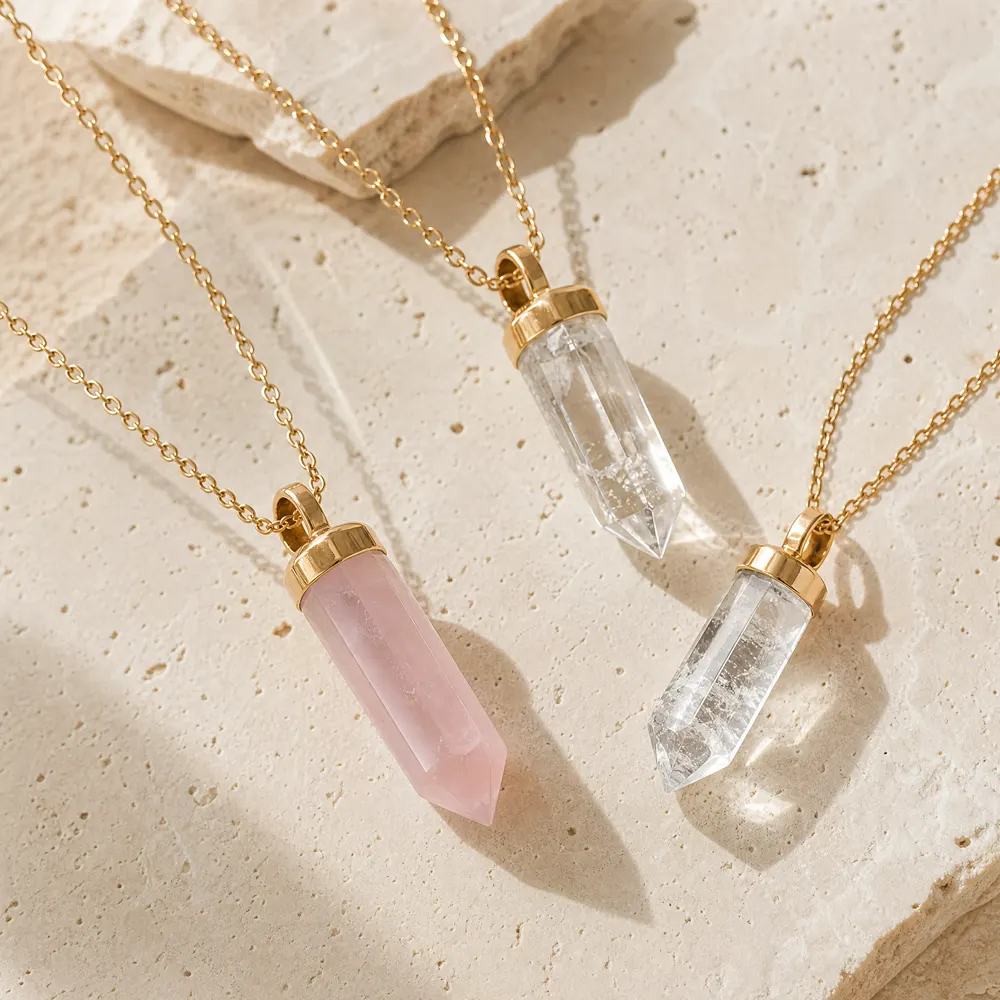
Start crystal jewelry gift set sourcing by writing one set brief that separates the sellable unit from its individual components and from the information needed to describe each one. Decide the recipient, occasion, price architecture and hero piece first; then specify the included jewelry, materials, dimensions, fastening, colorway and proposed presentation format. Treat the word ‘crystal’ as a material question rather than a marketing shortcut. The set should not move forward until the buyer can state what each visible stone or crystal element is, what is known or unknown about treatments and care, and which claims have documentary support. Finally, build a parent set record linked to component-level records so ecommerce, store teams and compliance reviewers are not forced to guess. [1] [2]
## 1. What is the one decision a gift-set brief must make first?
The first decision is the job of the set: is it a coordinated personal gift, an occasion-led capsule, a self-purchase pairing, or a replenishable add-on to an existing line? A buyer should name one primary occasion and one intended recipient profile before choosing components. That prevents a common failure mode in crystal jewelry gift set sourcing: combining attractive but unrelated pieces because each works alone. A set earns its place when the components create a coherent choice for the shopper and a clear unit for the retailer to merchandise and describe.
Write a set architecture that distinguishes the parent SKU from every included item. The parent record answers what the customer receives; component records answer what each necklace, bracelet, earring pair or other selected item is. This structure also makes substitutions visible: changing an earring finding, chain length, crystal color or care instruction is a component change, not a vague ‘set update’. Keep provisional choices marked as pending approved sample and written quotation rather than treating early imagery as final specification.
Buyer checklist
- State the primary gifting occasion and recipient profile.
- Choose one hero component that anchors the visual story.
- List every included jewelry item and whether it is sold separately.
- Define the parent set identifier and a component identifier for each item.
- Mark optional inserts, cards, pouches or boxes as proposed components until confirmed in writing.
- Record the buyer’s target channel: store, ecommerce, marketplace, corporate gifting or a defined mix.
## 2. Which jewelry gift set components belong together?
Select components by wear logic, not only by visual matching. A necklace-and-earring pairing is intuitive when the neckline, earring silhouette and color intensity can be worn together; a bracelet may be a better companion when earrings create fit or pierced-ear assumptions. Ask whether the buyer wants one simultaneous look, two interchangeable looks, or a hero piece with a lower-risk companion. The answer controls the number of components, the variation burden and the information a shopper needs before purchase.
Use a decision table to make the trade-off explicit. More pieces can raise perceived completeness, but they also multiply fit points, materials to describe and inventory relationships to track. The recommended route is not a universal rule; it is the choice that best matches the recipient, channel and evidence available for the specific proposed assortment. Any dimensions, materials or component quantities should remain subject to written quotation and the approved sample.
| Set architecture | Best when | Buyer questions before approval | Information burden |
|---|---|---|---|
| Necklace + earrings | A coordinated, immediately giftable look is the priority | Are earring type, necklace length and crystal placement suitable for the intended recipient? | Describe two wearable components and their individual materials and dimensions. |
| Bracelet + earrings | The brand wants a compact pairing with less emphasis on neckline styling | Is the bracelet adjustable, and does the earring style introduce a pierced-ear assumption? | Document wrist fit method, earring type, closures and care considerations. |
| Three-piece set | The assortment has a clear occasion or visual story that needs a complete look | Does the third piece add wear value rather than duplicate the first two? | Maintain three component records plus an unambiguous parent-set contents statement. |
| Hero piece + companion accessory | The buyer wants an entry gift around a signature item | Can the companion be explained as part of the same story without overstating material equivalence? | Make the contents and the material of each unlike component conspicuous. |
Buyer checklist
- Test whether each component can be worn with the hero piece without visual competition.
- Identify recipient assumptions, including pierced versus non-pierced ears and adjustable versus fixed fit.
- Decide whether color must match exactly across components or coordinate within an approved range.
- Confirm which component is photographed first and which is named first in product copy.
- Plan a component-level return to stock or substitution decision internally, if applicable.
## 3. How should buyers define ‘crystal’ and every material claim?
Do not let ‘crystal’ stand in for an unspecified stone, glass element, mineral specimen, coating or branded material. Put the exact material designation supplied and supported for each visible element into the component record, then use that designation consistently in copy, labels and image captions. If an element is glass crystal, say so where appropriate; if it is a gemstone, identify it accurately; if the composition or treatment status is not documented, treat the description as unresolved. Avoid upgrading a visual effect into a mineral, gem or origin claim.
This is more than copy control. The U.S. Federal Trade Commission says jewelry claims should be truthful and non-deceptive and explains that certain gemstone treatments, special-care needs, simulated stones and laboratory-created stones require clear disclosure in the circumstances it describes. GIA likewise notes that treatments may affect appearance, durability, value and care, and that they may not be obvious. For a buyer, the practical response is a claim-evidence register: every material, metal finish, treatment, simulated or laboratory-created status, care point and origin statement is either supported by documentation, excluded from copy, or flagged for verification. Requirements vary by market; check applicable requirements and qualified advisers rather than treating this guide as legal advice.
| Proposed wording | Use only when | Safer buyer action when evidence is incomplete |
|---|---|---|
| Crystal | The underlying material is clearly defined in the specification and the wording is not used to imply an unsupported gemstone identity | Name the supported material more specifically or hold the claim. |
| Gemstone name | The item is actually the named material and the claim is supported | Use a neutral, supported material description; do not infer identity from appearance. |
| Laboratory-created or simulated | The material status and terminology are documented and reviewed for the sales market | Do not call an item mined or natural; obtain documentation and market review. |
| Treated | Treatment information and any necessary care wording have been supplied and reviewed | Flag the treatment status as pending; do not state or imply untreated status. |
Buyer checklist
- Create a field for the exact crystal, glass, gemstone or other material description for each component.
- Separate material identity from color name, cut style, surface effect and marketing collection name.
- Request treatment and care information where a gemstone or pearl claim is contemplated.
- Record whether a claim is documented, unknown or intentionally not used.
- Review every use of ‘natural’, ‘genuine’, ‘simulated’, ‘imitation’, ‘laboratory-created’ or a gemstone name against evidence and applicable requirements.
## 4. What product information should travel with the set and its components?
Build a two-level product-information pack. The parent set page should answer: what is included, how many pieces are included, which item is the hero, whether the items are matched or merely coordinated, and the set identifier. Each component page should hold its own name, material description, dominant color, dimensions or adjustable range if provided, metal or base-material information if documented, fastening or finding type, care notes, imagery reference and approved claim status. Keep one source of truth so product pages, catalogues, marketplace feeds and store training do not drift apart.
For EU-bound consumer products, the General Product Safety Regulation includes requirements around product identification, manufacturer contact details and clear instructions or safety information where required; it also says distance-sale offers must visibly provide specified information. This is a useful reason to design traceability and safety fields at the beginning, not after creative copy is finished. It does not establish a one-size-fits-all jewelry checklist: buyers should map the intended countries, sales channels and product characteristics, then check applicable requirements with qualified advisers and the responsible economic operators.
| Field group | Parent set record | Component record |
|---|---|---|
| Identity | Set name, set ID, contents count | Item name, component ID, revision |
| Physical description | Coordinating theme and total contents | Material wording, color, dimensions, closure or finding where confirmed |
| Claims and care | Set-level gift or collection wording | Approved disclosures, care notes and claim-evidence status |
| Traceability | Relationship to component records | Identification and operator-information fields as applicable |
Buyer checklist
- Assign a parent set ID and a distinct ID to each included component.
- Write an exact contents line using component count and plain-language item names.
- Store approved material wording and the document or evidence reference behind it.
- Capture dimensions, fastening, compatibility and care only when confirmed for the approved sample.
- Link current images to the component revision they depict.
- Maintain fields for traceability and manufacturer or responsible-operator information as applicable to the destination market.
## 5. How can a buyer plan market-ready information without overclaiming?
Create a market matrix before finalising copy. List each planned destination—such as a European country, the United States, Canada, or a Middle Eastern market—next to the selling route, customer type and language needs. Then review the claims that could change customer understanding: material identity, plated or coated finish, precious-metal designation, gemstone or crystal terminology, treatment, care, age positioning and safety information. The goal is not to force identical packaging or copy everywhere; it is to know which facts must remain consistent and which local requirements must be checked.
Make source material usable for both people and systems. A sales associate needs a short contents and care statement; an ecommerce team needs structured attributes; a marketplace may require particular fields; and a reviewer needs documents tied to the exact component revision. Do not fill unknowns with confident adjectives such as ‘premium’, ‘hypoallergenic’, ‘nickel-free’, ‘safe’, ‘natural’ or ‘durable’. Those statements require relevant support and market review. If intended use could place the item in a children’s category, treat that as a separate requirement question rather than assuming an adult jewelry framework applies.
Buyer checklist
- Map every intended country and sales channel before approving final product wording.
- Separate descriptive facts from promotional language and from regulated or substantiated claims.
- Identify languages, warnings, care information and online listing fields to be checked for each market.
- Ask whether the set is positioned for adults, children or an unspecified recipient; do not leave audience status implicit.
- Obtain written internal or external review for material and safety claims where appropriate.
- Version-control translated text so it remains tied to the approved component specification.
## 6. What should an approved-sample review actually test?
An approved sample is the bridge between the set brief and the product record, not simply a photography prop. Review the assembled set against the component map: count the pieces, compare component identity, inspect the visual relationship, verify the intended closures or findings, and compare the proposed information to what can actually be observed or documented. Photograph the full set and each component under a consistent reference process so later teams can identify which version the information supports.
Use review questions that expose mismatches. Does the set image show exactly what the contents line promises? Does a pair of earrings mean two individual earrings or one pair in every system? Are color names marketing names or material claims? Does an adjustable item have a confirmed range, or should the range be left out? Are special-care statements supported and connected to the right component? Log every open point, owner and evidence needed; then release only the claims that have passed the buyer’s approved workflow.
Buyer checklist
- Compare the assembled sample with the parent contents statement line by line.
- Inspect and record component count, visible material effect, colorway, closure or finding, and any dimensions supplied.
- Check that component images, parent images and product-data revision match.
- Test whether copy distinguishes a pair, a single item and a set.
- Move unknown treatment, finish, care or origin statements to an open-questions log.
- Obtain written approval for the sample-linked information version before release.
## 7. How do you turn the plan into a reusable sourcing file?
Use one buyer worksheet with four connected tabs or sections: set architecture, component specification, claim-evidence register and product-information export. The architecture section records the shopper proposition and exact contents. The component specification stores material descriptions and physical details confirmed for the approved sample. The claim-evidence register makes uncertainty visible. The export section reformats only approved fields for ecommerce, catalogues, retailer onboarding or translation, avoiding manual retyping across channels.
At every handoff, ask a question rather than assuming completion: ‘Can a new colleague tell what is included without seeing the sample?’ ‘Can they identify the material without relying on a photo?’ ‘Can they find the document behind a material or care claim?’ ‘Can they see what changed between revisions?’ That discipline is the practical value of a crystal jewelry bundling guide. It preserves buyer choice while keeping unsupported commercial or technical assumptions out of the assortment plan.
Buyer checklist
- Use a controlled version number for the set record and each component record.
- Keep a dated list of open questions, supplied documents and approval status.
- Make set contents machine-readable as well as shopper-readable.
- Export only fields marked approved for the relevant destination and channel.
- Re-review descriptions when a component, material wording, sample or market changes.
Frequently asked questions
Should a crystal jewelry gift set always contain matching pieces?+
No. It should contain components that have a clear shared logic for the intended recipient and occasion. Matching color, motif, metal appearance or silhouette can work, but the contents line and component records must still describe each item separately.
Can buyers use the word ‘crystal’ without more detail?+
Only after deciding what the visible material actually is and whether the wording could imply an unsupported gemstone or other material claim. Keep the exact supported designation in the product record, and exclude or qualify wording that remains unverified.
What is the most useful information to request before approving copy?+
Request the component list, supported material descriptions, relevant treatment and care information, dimensions or adjustable range where applicable, fastening or finding type, and documentary references for claims you plan to publish. Tie the resulting copy to the approved sample and revision.
Does one set page remove the need for component-level data?+
No. The set page explains the bundle; component-level records preserve the facts that vary by item. This makes it easier to maintain accurate listings, assess a substitution and give consistent information across channels.
Conclusion
Plan the gift set as a linked system: a clear shopper proposition, defined components, evidence-led material language and a parent-to-component data structure. Start with the set architecture, verify unknowns against documentation and the approved sample, and check market-specific requirements with qualified advisers before publication. That process gives buyers a practical foundation for giftable jewelry assortment decisions without turning assumptions into claims.
Product category references
Explore relevant GemMira formats.
Next step
Move from general guidance to your specific brief.
For a GemMira wholesale, private-label, or custom inquiry, share the product category, market, material direction, and any available reference images. Commercial terms, final specifications, and sample options are confirmed in a quotation and approved pre-production sample. Email your requirements to info@gemmira.com.
Start an inquiry with this guide →Email info@gemmira.com