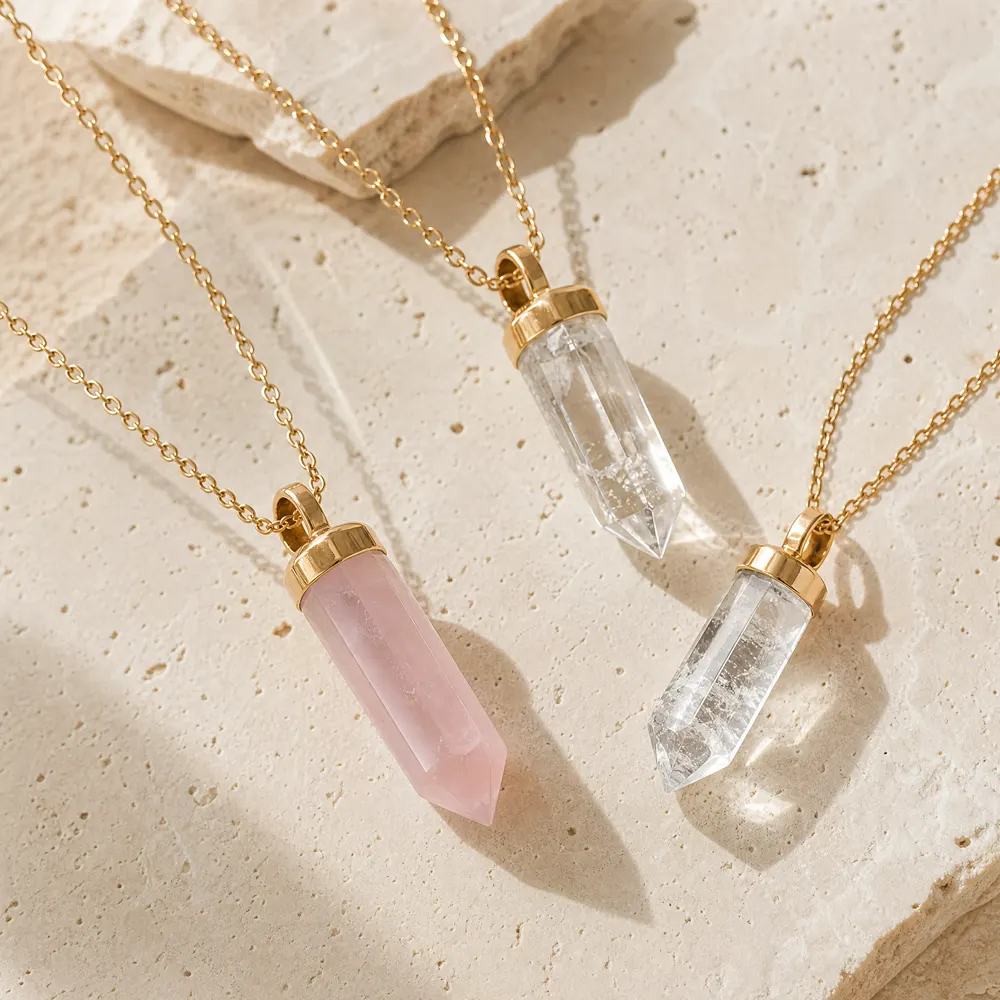
Answer first
A strong resort retail crystal jewelry sourcing brief is not a mood board plus a color list. It tells a sourcing partner what the collection must do in a particular destination, which product facts require verification, how samples will be approved, and what cannot change without written approval. Start with the retail moment: a poolside boutique, museum shop, cruise-terminal store, desert resort, ski lodge, or hotel gift shop has a different traveler, purchase occasion, and comparison environment. Translate that moment into defined product roles, not a generic “resort collection.” Specify the material descriptor and permitted claim language, design architecture, finish and contact-point expectations, assortment roles, destination cues, label/care-copy needs, market scope, requested evidence, sample criteria, and change-control rules. Treat every unconfirmed commercial or technical point as subject to written quotation, applicable requirements, documentation, and approved sample. [1] [2]
1. Begin with the retail moment, not the stone name
The first question in a crystal jewelry tourist retail brief is: what job is this item doing for a traveler at this location? A self-purchase after a day at the beach, a compact thank-you gift, a destination memento, and a dress-up accessory for an evening event are different missions. State the destination type, selling environment, principal shopper groups, relevant seasons, and intended wearing occasion. If the collection will sit beside apparel, fragrance, souvenirs, or fine jewelry, say so; adjacency changes the visual threshold and the amount of explanation a product can carry.
Then define one clear collection proposition in operational language. For example, “sunset-color, easy-to-gift pieces for a coastal hotel boutique” gives a different sourcing direction from “quiet, architecture-led keepsakes for a museum destination.” Record which cues are essential—local palette, landmark geometry, flora, nautical rhythm, celestial motif—and which are prohibited because they feel clichéd, culturally inappropriate, or too similar to existing stock. Do not turn location into an unverified origin or cultural claim. Where a design references a living culture, place, or protected motif, check applicable requirements and consult qualified local and legal advisers before use.
Buyer checklist
- Name the retail format and environment.
- Describe the traveler and purchase occasion.
- State the destination cue and prohibited cues.
- Assign memento, gift, or fashion roles.
- List sales markets and channels.
2. Convert the destination story into an assortment architecture
Buyers get more usable proposals when they request an architecture instead of a long, unprioritized wish list. Assign each product family a role: an entry gift, a signature self-purchase, a coordinated add-on, or a higher-visibility focal piece. Specify category boundaries—such as earrings, pendants, bracelets, rings, or charms—then explain how each role earns its place. A destination retailer does not need every silhouette in every color. It needs a controlled set that is recognizably connected when displayed together and understandable when bought alone.
Use an explicit decision matrix so a sourcing partner can resolve conflicts between local storytelling and portability. A visual cue may be strong enough for a hero pendant but too literal for a traveler who wants to wear it after the trip. Make the proposal show both the location-led element and the non-location-specific companion pieces. Ask for a line plan that identifies proposed material, finish, colorway, motif, product role, and the sample needed for each proposed SKU; do not assume assortment breadth, availability, or commercial terms until confirmed in writing.
| Context | Brief direction | Control |
|---|---|---|
| Beach or island resort | Compact gifts with a restrained coastal palette | Avoid fragile-looking detail as the sole differentiator |
| Cultural or museum destination | Considered forms with reviewed interpretive language | Do not imply affiliation, provenance, or endorsement |
| Mountain or desert lodge | Mineral or horizon-led pieces plus wearable companions | Keep place cues legible, not literal |
| Travel hub or hotel shop | Quickly understood gift roles and color families | Do not depend on long explanations |
Buyer checklist
- Set a role for each product family.
- Separate hero from companion designs.
- Request a line plan per proposed item.
- Flag motifs needing local review.
- Mark unagreed services as open scope.
3. Define crystal and material language before visual approval
In a sourcing brief, “crystal” is not enough to serve as the material field. Require the proposed product description to distinguish the relevant material category and the words that may appear in product copy, tags, and digital listings. Ask for the stone or decorative material name, whether a description is natural, laboratory-created, imitation, coated, dyed, or otherwise treated where applicable, the metal or other base material description, and the finish description. The U.S. Federal Trade Commission says its Jewelry Guides address accurate information for gemstones and their laboratory-created and imitation substitutes, as well as representations including type, quality, metallic content, treatment, durability, origin, and other attributes [FTC Jewelry Guides].
Build a claim-control column into the line plan. It should pair each proposed customer-facing phrase with its written basis, owner, market, and approval status. This is especially important when a color effect, surface effect, or treatment changes the material’s appearance. The Gemological Institute of America explains that treatments beyond cutting and polishing can alter color or clarity and may affect durability or special care; it also notes that such treatments are not always apparent to an untrained eye [GIA Gem Treatments]. Do not approve terms such as “natural,” “untreated,” “healing,” “energy,” “protective,” “authentic,” or a geographic origin claim unless the proposed wording, documentation, applicable requirements, and approved sample support it. Do not make health, healing, medical or wellness outcome, medical, spiritual, energy, or feng-shui efficacy claims.
Buyer checklist
- Require a material descriptor per item.
- List permitted and prohibited copy.
- Request applicable treatment/care information.
- Separate visual reference from factual claim.
- Approve copy before release.
4. Specify wear, contact points, and care as sample acceptance criteria
Destination jewelry is often handled quickly, tried on under bright retail lighting, packed into luggage, and worn in unfamiliar settings. The brief should therefore identify what the approved sample must demonstrate, rather than promising a level of durability no one has defined. State the intended use, visible sides of the piece, closure or fastening expectations, moving parts, stone-setting approach where relevant, surface-finish expectations, edges, and any parts intended for prolonged skin contact. Define the reference sample, image, drawing, or approved color standard that will govern visual comparison.
Ask for care copy only where it is supported by the material information and approved for the relevant market. Do not convert a supplier statement into a universal care or performance promise. In the United States, 16 CFR 23.24 states that gemstone treatment must be disclosed when it is not permanent, creates special care requirements, or significantly affects value; its note says the disclosures apply at every level of trade [16 CFR 23.24]. This is a useful reminder to capture treatment, care, and disclosure questions upstream, while checking the rules that apply to every destination market with qualified advisers.
| Attribute | Brief states | Buyer reviews |
|---|---|---|
| Visual identity | Palette, motif, viewing angles | Match to destination direction |
| Materials | Descriptor and care/disclosure question | Alignment of description and sample |
| Finish | Permitted metal/finish description | Consistency at visible contact points |
| Function | Closure and wearer interaction | Operation against the stated criterion |
| Claims | Approved copy list | No unapproved promise |
Buyer checklist
- State intended use and handling.
- Identify closures and contact components.
- Set visual sample references.
- Request evidence-based care copy.
- Record unacceptable outcomes.
5. Map market, labeling, and documentation decisions early
A resort retailer may sell to international visitors even when the store is in one jurisdiction, and a brand may reuse the same design across Europe, North America, and the Middle East. Put the actual sales markets, language needs, sales channels, and responsible review owner in the brief. Then make a market-by-market list of questions: what product description is intended, which material or metal marking requirements may apply, what chemical or product-safety requirements are relevant, which warnings or care information are needed, and which records must be available. This is planning information, not legal advice; check applicable requirements with qualified advisers before sale.
Documentation should be requested by purpose, not as an unexamined pile of files. For each request, name the SKU or component scope, version date, applicable market, the claim or requirement it is intended to support, and who will review it. The FTC’s Jewelry Guides emphasize truthful representations across characteristics including metal content, treatment, origin, durability, price, and value [FTC Jewelry Guides]. That makes a useful operational rule: do not let a marketing phrase, hangtag, online attribute, and sourcing record describe the same piece differently. Any testing, certification, conformity evidence, or laboratory result remains subject to applicable requirements, supplied documentation, and buyer review; none should be presumed from a concept board.
Buyer checklist
- List sales markets and languages.
- Assign review owners.
- Link documents to a specific purpose.
- Version-control copy and labels.
- Escalate legal questions to advisers.
6. Give the sourcing partner a decision-ready commercial request
The commercial part of the brief should make comparison possible without assuming commercial capability. Provide a request-for-quotation template that separates mandatory specifications from alternatives. For every option, require the same product reference, description, material language, quantity scenario supplied by the buyer, sample requirement, market scope, artwork status, requested documents, and open questions. If the buyer has not chosen quantities, delivery window, packaging, display, labeling, or service scope, mark the field “to be confirmed” rather than silently treating it as included.
Use a decision gate instead of negotiating every dimension at once. First decide whether the proposal fits the destination proposition and permitted claim language. Next decide whether the material description, documentation path, and approved sample criteria are clear enough for review. Only then compare written quotations on a like-for-like scope. This order helps prevent a low headline figure from masking missing requirements or an attractive sample from bypassing material and claim controls. Any MOQ, price, lead time, capacity, stock position, logistics, delivery, warranty, after-sales service, packaging capability, display service, certification, or testing status must remain subject to written quotation, applicable requirements, documentation, and approved sample.
| State | Use when | Action |
|---|---|---|
| Advance | Direction, description, and claims are defined | Request the agreed sample |
| Clarify | Material, market, or document fields are open | Seek clarification before comparison |
| Hold | Claims are unsupported or scope conflicts | Record the reason |
Buyer checklist
- Use one controlled RFQ template.
- Separate requirements from alternatives.
- Mark unknown quantities as open.
- Identify included and excluded scope.
- Compare only matching assumptions.
- Record quote version and owner.
7. Lock the brief through samples, artwork, and controlled changes
A concise approval path stops a location-led collection from drifting after the initial sample. Define the approval order: concept direction, line plan, material and claim language, sample, product description and care copy, then final artwork or listing inputs. At each stage, identify the decision-maker, the accepted file or sample version, the unresolved item, and the next permitted action. A sample should be reviewed against the written brief, not against memory of a mood board. Photographing the approved reference and recording its identifier can make later internal review more disciplined, but it does not replace the approved physical sample or applicable documentation.
Set a change-control rule for everything that could affect appearance, description, care, or market review. Changes to decorative material, treatment statement, color effect, metal descriptor, finish, closure, motif, product copy, or component source should trigger buyer review before they are represented as approved. This is particularly useful in travel retail jewelry planning because a collection may be adapted for several destinations. Keep a master core that remains consistent, then document each location-specific variation as its own version. Do not infer continuity of quality, availability, or compliance from a previous design or sample; verify the proposed scope in writing.
| Gate | Question | Record |
|---|---|---|
| Concept | Does it serve the destination mission? | Approved direction |
| Information | Are descriptors and questions defined? | Line plan and issues log |
| Sample | Does it meet written criteria? | Sample record and notes |
| Release | Are copy, files, and controls aligned? | Release checklist |
Buyer checklist
- Assign an owner and version at each gate.
- Preserve approved sample references.
- Approve copy separately from appearance.
- Log changes affecting claims or materials.
- Version destination-specific variations.
Frequently asked questions
What is the key difference between a resort and a standard fashion jewelry brief?+
A resort brief begins with the place-specific retail mission: who the traveler is, what they are buying, and which destination cue is appropriate. It then controls product roles, souvenir cues, cultural references, market scope, and quick in-store comprehension.
Can a buyer specify “crystal” and approve details later?+
No. Require the proposed material descriptor, consumer-facing name, and applicable treatment or care question before final approval. Keep unknown points subject to written documentation, applicable requirements, and approved sample.
Which tourist-retail claims need close review?+
Review natural status, treatment, origin, authenticity, affiliation, cultural meaning, metal content, durability, and value. Do not make health, healing, medical or wellness outcome, medical, spiritual, energy, or feng-shui efficacy claims. Check market-specific wording with qualified advisers.
What if a sample differs from the brief?+
Record the difference against the accepted reference, then approve a revision, request clarification, or hold the item. Update the line plan and controlled copy when the difference affects description or review.
Conclusion
The best crystal jewelry tourist retail brief makes key decisions visible: the destination story, traveler purchase moment, product roles, approved material and claim language, and release gates. Ask precise questions early, keep unconfirmed matters open until documented, and control every destination variation. This creates a clearer sourcing conversation without assuming unquoted or unapproved facts.
Product category references
Explore relevant GemMira formats.
Next step
Move from general guidance to your specific brief.
For a GemMira wholesale, private-label, or custom inquiry, share the product category, market, material direction, and any available reference images. Commercial terms, final specifications, and sample options are confirmed in a quotation and approved pre-production sample. Email your requirements to info@gemmira.com.
Start an inquiry with this guide →Email info@gemmira.com