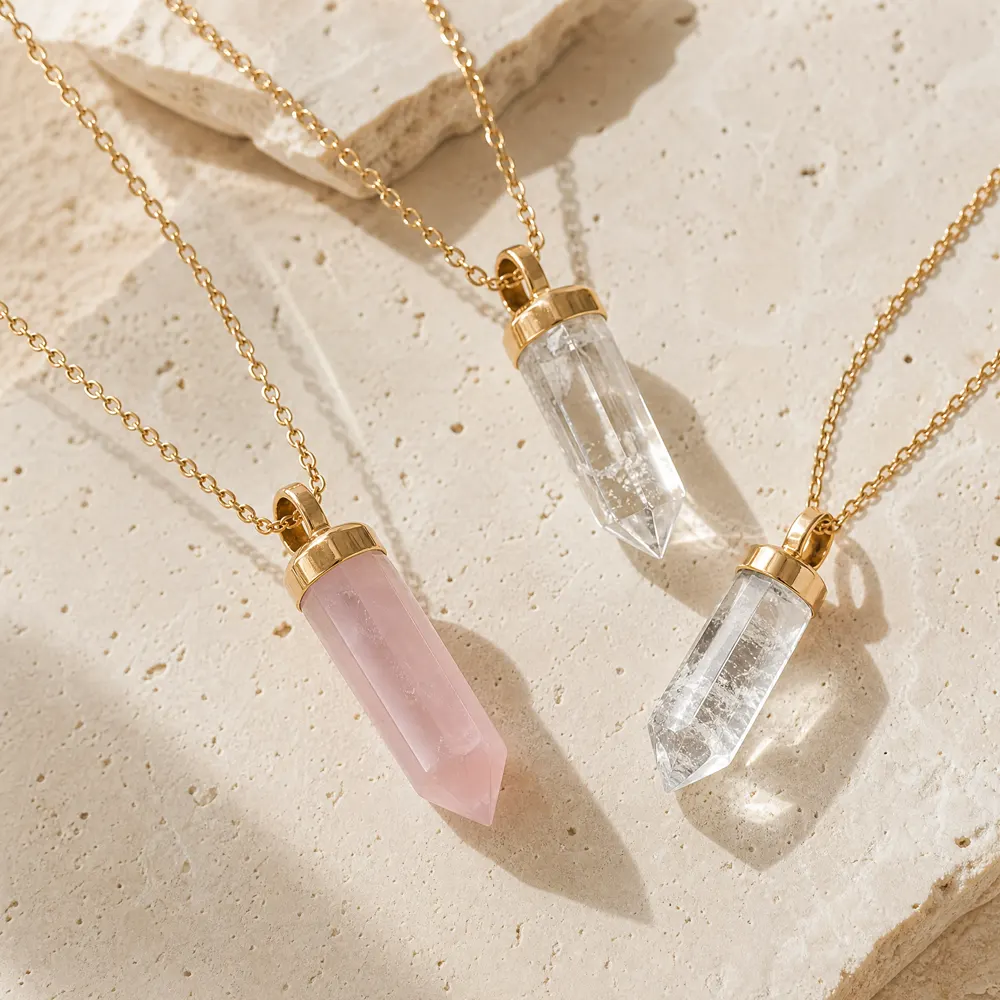
Answer first
Build the assortment as a decision architecture, not as a long list of attractive SKUs. Start with the customer and channel job, then define a balanced matrix of jewelry format, price or value tier, crystal specification, metal or finish, wear occasion, and market. Protect space for dependable core items, use a smaller set of discovery or statement items, and validate every proposed SKU against documented material, treatment, safety, labeling, and commercial requirements. GemMira-specific MOQ, pricing, lead time, capacity, certifications, testing, material origin, treatment status, stock, logistics, delivery, warranty, packaging capability, and customer outcomes are not established here; confirm them through written quotation, applicable requirements, documentation, and an approved sample. [1] [2]
1. Define the architecture before selecting products
Assortment architecture is the hierarchy that explains why each SKU exists and how it relates to the others. It should let a buyer answer five questions quickly: who is the item for, what need or occasion does it serve, where will it be sold, what is its value position, and what makes it distinct from another SKU? Oracle describes assortment planning as allocating the right styles, sizes, and colors across channels while balancing product variety and variation. For crystal jewelry, translate that principle into a documented product hierarchy rather than relying on color names or intuition alone.
A useful hierarchy is category, format, customer role, value tier, crystal and material specification, finish, size or fit, and channel or market. Keep commercial claims separate from product facts. A crystal color may support visual merchandising, but it does not by itself establish origin, treatment, grade, durability, or any wellness effect.
Use a one-line role statement for every proposed SKU, such as "everyday stud for replenishment", "giftable pendant for a defined occasion", or "visual anchor for a premium display". If two items have the same role, silhouette, material statement, and channel, require a clear reason to keep both.
| Architecture level | Buyer decision | Example fields |
|---|---|---|
| Category and format | What is being sold? | Earrings, pendant, bracelet, ring, set |
| Customer role | Why should it be stocked? | Entry, core, gift, occasion, statement |
| Product facts | What is it made of? | Crystal description, base metal, finish, dimensions |
| Channel and market | Where and under which rules? | Boutique, ecommerce, department store; EU, US, Middle East |
Buyer checklist
- Write a role statement for each SKU before requesting a quote.
- Separate product attributes from marketing stories and unverified benefits.
- Give every SKU a unique place in the category hierarchy.
- Record the intended sales channel and target market.
- Mark unknown specifications as open questions rather than assumptions.
2. Build breadth and depth with explicit roles
Breadth is the number of distinct product concepts; depth is the number of meaningful variants within a concept. A new assortment often fails by adding breadth without enough depth in the few formats customers understand, or by adding many near-duplicates that make buying and replenishment harder. Use a role-based split instead: core items provide recognizable coverage, supporting items extend color or format choices, and discovery items create visual interest without carrying the whole range.
Do not prescribe a universal percentage mix. The right balance depends on historical sell-through, open-to-buy, store space, channel economics, customer segments, and the retailer’s tolerance for testing. Instead, set a planning guardrail: every new SKU must either fill a documented gap, improve a price or format ladder, or provide a deliberate seasonal or visual function.
For a multi-country program, create a common global core and controlled local modules. A European ecommerce assortment may need richer product data and safety documentation; a North American wholesale program may require careful wording around gemstone identity, treatments, and metal claims; a Middle Eastern assortment may need channel-specific gift, modest styling, or occasion considerations agreed with local buyers. Treat these as hypotheses to validate, not universal cultural assumptions.
| Role | Purpose | Decision test |
|---|---|---|
| Core | Cover repeatable everyday demand | Would the range feel incomplete without it? |
| Supporting | Offer a useful alternative in color, size, or format | Does the variant serve a distinct customer or channel need? |
| Discovery | Test a new look, story, or construction | Is the test measurable and limited in exposure? |
| Statement | Create display impact or premium trade-up | Does it have a clear visual and commercial role? |
Buyer checklist
- Define what counts as a core, supporting, or discovery SKU.
- Use sales and inventory evidence where available; label forecasts separately.
- Set a maximum number of near-duplicate variants for each concept.
- Create a global core plus documented local modules when markets differ.
- Review breadth and depth together before approving the range.
3. Design a value and price ladder without inventing economics
A value ladder helps a buyer present a coherent good-better-best or accessible-core-premium choice. It is not a claim about GemMira pricing. Ask suppliers for written quotations tied to the same specification, quantity basis, packaging scope, currency, trade terms, and required documentation before comparing offers. Unknown MOQ, pricing, lead time, production capacity, or packaging capability must remain subject to written quotation and approved sample.
Build the ladder from observable differences that shoppers can understand: size, construction complexity, number of components, finish specification, design detail, set configuration, or documented material distinction. Avoid using words such as premium, natural, genuine, flawless, or treated unless the description is accurate, supportable, and appropriate for the applicable market. The U.S. eCFR jewelry guides caution against misleading gemstone identity, artificial or imitation descriptions, and undisclosed treatments that affect permanence, care, or value.
Use landed-cost and margin calculations internally, but do not confuse a target retail price with a supplier commitment. For each tier, record the intended retail position, allowable cost range, evidence required, and fallback if the specification cannot be documented.
| Tier | Typical role | Evidence to request |
|---|---|---|
| Accessible | Low-friction trial or add-on | Dimensions, components, finish, packaging and order terms |
| Core | Main range coverage | Full product specification, material and treatment disclosures, sample approval |
| Premium | Trade-up or gifting | Distinctive construction, documented materials, care information, applicable testing or compliance records |
Buyer checklist
- Define each tier by customer value and product evidence, not adjectives alone.
- Compare supplier quotes on an identical specification and trade-term basis.
- Separate target retail price, target cost, and confirmed quotation.
- Flag treatment, imitation, laboratory-created, and origin wording for review.
- Require written confirmation for all GemMira commercial and technical unknowns.
4. Use a buyer matrix to control SKU duplication
A matrix makes assortment gaps visible. Put product formats on one axis and customer or occasion roles on the other, then add columns for crystal description, color family, finish, size or fit, tier, channel, and documentation status. The matrix is a planning tool, not a substitute for a technical file or legal review.
Score proposed items with a simple buyer-led rubric: strategic role, differentiation, customer clarity, channel fit, operational readiness, and evidence readiness. A high visual score should not overcome an unresolved material or compliance question. Similarly, a technically documented item may still be a poor assortment choice if it duplicates an existing SKU.
Before sampling, run a white-space review. Ask whether the gap is real or whether the taxonomy is too narrow. For example, a missing bracelet may be solved by a new fit option, a matching set, or a different price tier rather than another color of an existing bracelet.
| Evaluation dimension | Question | Decision |
|---|---|---|
| Role | Does the SKU solve a defined customer or channel job? | Keep, revise, or reject |
| Differentiation | Can a buyer explain why it is not a duplicate? | Keep or consolidate |
| Evidence | Are material, treatment, care, and safety inputs available? | Hold until documented |
| Readiness | Can product data, images, and sample approval be completed? | Pilot or defer |
Buyer checklist
- Map every proposed SKU into one matrix cell or a deliberately marked multi-cell role.
- Identify duplicate silhouettes, colors, and use occasions.
- Record the reason for every white-space fill.
- Keep compliance and documentation status visible beside commercial scores.
- Retain rejected concepts and reasons for future range reviews.
5. Localize the range for Europe, North America, and the Middle East
Localization should change the offer only where customer behavior, channel structure, language, climate, styling, or applicable requirements justify it. Start with a shared product master containing neutral facts: SKU, dimensions, materials as confirmed, finish, crystal description, care instructions, country-of-origin data where required, images, and documentation references. Then create market views rather than rewriting facts independently.
For EU sales, the European Commission’s Access2Markets guidance says the General Product Safety Regulation has applied since 13 December 2024 and covers consumer products, including products designed for professional use that subsequently reach consumers. It highlights risk assessment and the role of a responsible economic operator. Treat GPSR review as a market-entry workstream with the importer or responsible party; do not assume that a supplier page alone is sufficient.
For North America, review wording against the destination market and channel. In the United States, the eCFR guidance covers disclosure of gemstone treatments and clear qualification of laboratory-created, imitation, or simulated stones. For the Middle East, agree language, gifting, modest styling, and channel requirements with the local buyer or distributor. Do not infer religious, spiritual, wellness, or feng-shui efficacy from a crystal name or color.
| Market workstream | Plan for | Do not assume |
|---|---|---|
| Europe | GPSR risk and product-information review, responsible operator, local listing data | That a B2B specification automatically satisfies every EU obligation |
| North America | Destination-specific claims, treatment and gemstone terminology, retailer policies | That color or trade language proves natural origin or value |
| Middle East | Buyer-approved language, occasion and styling modules, distributor requirements | That one regional assortment fits every country or channel |
Buyer checklist
- Assign a market owner for EU, North American, and Middle Eastern listings.
- Use one controlled product master and localized views.
- Confirm responsible-operator, importer, labeling, and online-information needs for each destination.
- Review gemstone, treatment, metal, and care wording before publication.
- Remove efficacy claims that cannot be substantiated and do not validate wellness claims.
6. Turn the architecture into a controlled buying and review cycle
The architecture becomes useful when it governs decisions from brief to reorder. Begin with a category objective and a SKU budget. Issue a structured request for information or quotation that repeats the matrix fields. Review samples against the approved brief, record deviations, and release only the versions with accepted product data and market wording. GemMira-specific manufacturing, testing, documentation, stock, logistics, delivery, warranty, and packaging details remain subject to written quotation, applicable requirements, documentation, and approved sample.
After launch, review each SKU by role rather than by sales alone. A low-volume statement item may be performing its display function, while a core item may be failing because of fit, photography, availability, or unclear product data. Use the same architecture for returns, customer questions, defects, and reorder decisions so that the assortment learns without losing control.
Set a review cadence that matches the category and channel. At each review, retire duplication, promote evidence-backed winners, revise weak descriptions, and record open supplier questions. This creates a traceable range history without promising availability or continuity that has not been confirmed in writing.
| Stage | Required output | Owner |
|---|---|---|
| Plan | Architecture, matrix, target roles, market scope | Merchandising and buying |
| Source | Comparable quote, specification responses, open-question log | Buyer and sourcing partner |
| Approve | Sample decision, product data, claims and compliance review | Buyer, quality, and market stakeholders |
| Review | SKU action: retain, revise, test, consolidate, or retire | Category owner |
Buyer checklist
- Approve the category objective and SKU budget before sampling.
- Send the architecture fields in every RFQ or supplier brief.
- Compare samples to an approved reference and record deviations.
- Track sell-through, returns, questions, defects, and documentation gaps by role.
- Confirm reorder, continuity, and commercial terms in writing each time.
Frequently asked questions
How many SKUs should a wholesale crystal jewelry assortment contain?+
There is no responsible universal number. Set the range from channel space, open-to-buy, customer demand, operating capacity, and the role matrix. Start with a coherent core, add only evidence-backed variants, and use a limited test group for discovery items.
Should every market receive the same crystal jewelry range?+
No. Use a shared product master and a controlled global core, then localize where customer behavior, channel needs, language, styling, or applicable requirements justify a change. Validate each local module with the relevant buyer, importer, or distributor.
What product information should buyers request before approving a SKU?+
Request the confirmed product description, dimensions, components, finish, crystal identity as represented, treatment disclosure where applicable, care information, images, packaging and labeling inputs, destination-market requirements, and any agreed testing or documentation. Keep unknowns open until supported in writing and by an approved sample.
Can crystal jewelry be marketed with healing, energy, or feng-shui benefits?+
Do not present those effects as established product performance. Use cautious, buyer-approved descriptive language focused on appearance, design, gifting, or cultural context, and remove claims that could mislead consumers or create regulatory risk.
Conclusion
The strongest wholesale crystal jewelry assortment is a controlled system of roles and decisions, not the largest possible SKU list. Build a matrix that links format, customer job, value tier, product facts, channel, market, and evidence; protect a clear core; localize deliberately; and review performance without overstating what is known. For GemMira, confirm all commercial and technical details through written quotation, applicable requirements, documentation, and an approved sample before committing to a range.
Product category references
Explore relevant GemMira formats.
Next step
Move from general guidance to your specific brief.
For a GemMira wholesale, private-label, or custom inquiry, share the product category, market, material direction, and any available reference images. Commercial terms, final specifications, and sample options are confirmed in a quotation and approved pre-production sample. Email your requirements to info@gemmira.com.
Start an inquiry with this guide →Email info@gemmira.com