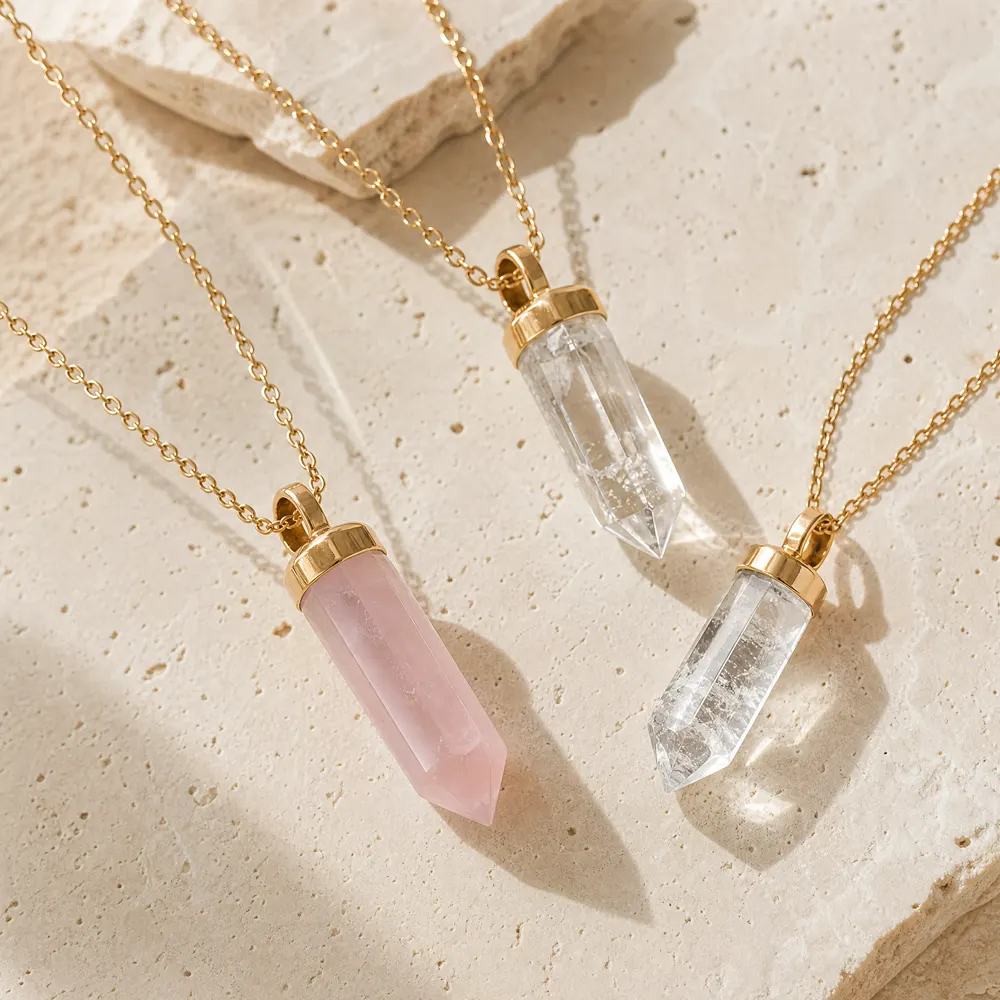
Answer first
Plan a crystal jewelry supplier transfer as a controlled re-qualification project: freeze the approved selling version, build a SKU-level evidence file, ask the incoming supplier to map every requirement and exception in writing, approve representative transfer samples, then cut over only after commercial, product-information, and market-specific records are reviewed. An approved sample is an important reference, but it is not by itself proof of material identity, claim accuracy, regulatory suitability, origin, or repeatability. [1] [2]
1. Set the transfer boundary before requesting quotations or samples
Start with a transfer register rather than a generic request for a ‘same’ collection. List every SKU, its current selling configuration, the target markets, the planned cutover window, and the owner of each approval. State whether the transfer covers only a visual direction, an existing bill of materials, packaging artwork, digital product data, or all of these. This prevents an incoming supplier from pricing or sampling against an unstated interpretation of ‘equivalent.’
Decide what may change and what is frozen. Examples of controlled variables include silhouette, nominal dimensions and measurement points, component construction, closure, colour description, surface finish, unit-of-sale configuration, care wording, and photography angle. Treat each proposed change as an exception with a buyer decision, not as an informal production adjustment. Confirm separately that the buyer has the rights or permissions needed to share designs, drawings, artwork, and supplier-originated files.
| Transfer approach | When it may fit | Buyer control needed | Key risk to avoid |
|---|---|---|---|
| Reference-sample transfer | A small SKU group with a stable approved reference | Photographs, measurements, component map, and written deviations log | Assuming visual similarity proves construction or material equivalence |
| Specification-led transfer | A collection with usable drawings, product data, and controlled requirements | Revision-controlled master specification and supplier line-by-line acknowledgement | Sending obsolete or conflicting files |
| Redesign with continuity | The buyer accepts defined product changes while retaining an assortment role | New SKU/version, claim review, new approvals, and retail-data update | Selling a changed item under the former product description |
Buyer checklist
- Name a buyer-side transfer owner and approvers for product, commercial, compliance, and content decisions.
- Create a SKU register with current SKU, proposed supplier SKU, version, target market, and status.
- Classify each file as buyer-owned, supplier-owned, licensed, or permission-required before sharing.
- Write down non-negotiable attributes and permitted alternatives for each SKU.
2. Build a version-controlled jewelry specification archive
Create one controlled archive for every transferring SKU. It should join the approved physical sample to its evidence: dated images, dimension sheet with measurement points and tolerances where the buyer has set them, component and assembly description, finish and colour references, packaging and unit-of-sale instructions, approved copy, care information, and prior issue history. Identify the document revision, source, date, and approver; retain superseded versions as read-only records rather than silently overwriting them.
Ask the incoming supplier to return a completed requirements-mapping sheet. Each requirement should be marked as accepted, proposed alternative, unavailable, or needs buyer clarification. A blank acknowledgement is not a map. Where the incoming supplier cannot confirm an attribute from the available evidence, record the gap and decide whether a new specification, sample, test, or claim change is needed. Commercial terms, capability, timing, and technical details remain subject to written quotation, applicable requirements, documentation, and approved sample.
Buyer checklist
- Assign each SKU a transfer version and attach dated reference-sample photographs.
- Record measurement points, not only overall dimensions or a single image.
- Separate verified source documents from buyer preferences and open questions.
- Require a written requirement-by-requirement response from the incoming supplier.
- Log every accepted variance with the decision-maker and effective version.
3. Re-qualify the incoming supplier through samples and documented comparisons
Use transfer samples to verify the defined selling version, not to make an unsupported conclusion that two supply chains are identical. Request samples representing the collection’s technical and visual range, such as a pendant, drop earring, and bead bracelet where those constructions are in scope. Compare each sample against the approved reference under a repeatable inspection brief covering the buyer’s stated requirements, including configuration, dimensions, component placement, visual appearance, closure operation, finish, labels, and packaging where applicable.
Keep a three-way decision record: approved, approved with controlled changes, or not approved. An ‘approved with controlled changes’ decision must identify the revised SKU or version, the exact consumer-facing information that changes, and whether images, packaging, invoices, inventory records, or market documentation must be updated. Do not use a transfer sample to imply a particular crystal identity, treatment status, metal composition, or test result unless supporting documentation and the applicable review support that wording.
Buyer checklist
- Use the same documented comparison points for every submitted transfer sample.
- Photograph reference and transfer samples with SKU, date, and version identifiers.
- Record both objective deviations and subjective buyer preference separately.
- Release production only against the signed sample decision and current specification revision.
- Quarantine unresolved SKUs from launch, product-page refresh, and replenishment planning.
4. Recheck consumer claims, product information, and market-facing language
A supplier change is a useful trigger to recheck every product-page, label, insert, catalogue, and marketplace field that describes the item. In the United States, the FTC Jewelry Guides apply across the trade and state that it is unfair or deceptive to misrepresent a material aspect of an industry product, including type, quality, metallic content, size, colour, treatment, origin, production, or manufacture. Review the actual evidence before retaining, revising, or removing such claims; clear and prominent qualifications matter when they are needed. See the [FTC Jewelry Guides](https://www.ecfr.gov/current/title-16/chapter-I/subchapter-B/part-23).
Keep commercial storytelling distinct from factual product description. Do not carry forward healing, medical or wellness outcome, medical, spiritual, energy, feng-shui, or wellness efficacy claims for crystal jewelry. If a supplier proposes different terminology, material descriptions, visual names, or origin wording, treat it as a change request. The buyer should approve final retail language only after it is aligned with the product evidence and the requirements of the intended market.
Buyer checklist
- Inventory all product names, descriptions, marketplace fields, labels, inserts, and images tied to each transfer SKU.
- Flag claims about materials, metal content, dimensions, colour, treatment, origin, manufacturing method, or durability for evidence review.
- Remove unsubstantiated wellness or efficacy language from transfer materials and consumer copy.
- Version-control approved retail copy independently from factory production instructions.
5. Review safety, traceability, and import records for the destination market
Do not assume that documentation from the outgoing supplier automatically covers a new manufacturing route, component set, or selling version. For consumer products placed on the EU market where the General Product Safety Regulation applies, manufacturers must perform an internal risk analysis and draw up technical documentation containing at least a general product description and safety-relevant characteristics; the documentation must be kept available to market-surveillance authorities for 10 years after placement on the market. The responsible economic operator must be able to provide documented evidence of specified checks on request. Use this as a prompt to determine, with the responsible party and applicable advisers, whether the transfer changes the evidence file or risk assessment. See [Regulation (EU) 2023/988, Article 9 and Article 16](https://eur-lex.europa.eu/eli/reg/2023/988/oj/eng).
For U.S. imports, country-of-origin marking and origin analysis should be reviewed from the actual transaction facts. CBP states that every article of foreign origin entering the United States must be legibly marked with the English name of its country of origin unless a legal exception applies, and cautions that its general information alone may not constitute reasonable care for complicated origin questions. Confirm the importer’s instructions, relevant entry data, marking approach, and broker or customs advice before shipment; do not simply reuse a prior country statement. See [CBP: Marking of Country of Origin on U.S. Imports](https://www.cbp.gov/trade/rulings/informed-compliance-publications/marking-country-origin-us-imports).
Buyer checklist
- Identify the economic operator, importer, and compliance owner for each destination market.
- Compare prior evidence with the new product configuration and document any changed components or process steps.
- Review origin wording, marking, and customs data using the facts of the new supply arrangement.
- Keep market-specific evidence, declarations, and correspondence linked to the exact SKU and version.
- Escalate uncertain legal, customs, or regulatory interpretation to qualified advisers or the relevant authority rather than relying on a supplier assertion.
6. Plan the cutover, receiving controls, and exception path
A practical cutover distinguishes old and new stock even when the retail-facing SKU remains unchanged. Define the first purchase order or production reference for the incoming supplier, the last acceptable receipt from the outgoing route, the stock segregation method, and which version appears in the ERP, warehouse, and e-commerce systems. If the product or its information changes, give it a distinct internal revision and make sure the linked images and descriptions match the received version.
Set a receiving plan before the first delivery. It can use a documented SKU, lot, or production reference supplied by the relevant party; the buyer should decide the inspection scope and acceptance criteria based on the approved transfer file and applicable requirements. Capture exceptions with photos, quantities, documents, and disposition. This produces usable evidence for corrective discussion without asserting a warranty, delivery outcome, stock position, or supplier performance that has not been agreed in writing.
Buyer checklist
- Document the last old-route and first new-route reference, plus the effective date for each SKU revision.
- Prevent mixed or unidentified stock from using the same receiving record.
- Match received unit configuration, labels, packaging, and product information to the approved transfer version.
- Record deviations with SKU, lot or production reference when available, date, quantity, photos, and buyer disposition.
- Hold a post-receipt review before expanding the transferred range or changing further collection variables.
Frequently asked questions
Is an approved sample enough to move a crystal jewelry SKU to another supplier?+
No. It is a valuable visual and functional reference, but it does not by itself establish that the incoming supplier’s materials, construction, product claims, market documentation, origin, or repeat production match the prior arrangement. Pair it with a controlled specification archive, supplier mapping, and a documented approval decision.
Can a buyer keep the existing retail SKU after a supplier transfer?+
Possibly, if the buyer’s systems and the approved product version support it. If a material attribute, configuration, dimension, claim, packaging, or other selling information changes, use a controlled revision and review whether a new internal or retail SKU is more accurate. The decision should be recorded rather than assumed.
Does a supplier transfer always require new tests or compliance documents?+
Not automatically. The required review depends on the product, the destination market, the changes introduced, and the applicable rules. The buyer should compare the prior evidence with the new configuration and obtain the documentation or assessment appropriate to the actual requirements; no prior result should be represented as covering a changed item without support.
When should the buyer retire the old specification version?+
Retire it from active ordering and listing use after the cutover decision is effective, but retain it as a read-only historical record linked to prior stock and approvals. The new version should identify its effective date, approved sample, deviations, and the documents that apply to the incoming supply route.
Conclusion
A reliable crystal jewelry supplier transfer plan turns an informal handover into a traceable buyer decision. Freeze the intended selling version, preserve the evidence behind it, obtain a written mapping from the incoming supplier, compare transfer samples consistently, and recheck claims, safety records, and import data against the actual new arrangement. Keep the old and new versions distinguishable until receiving evidence confirms the documented cutover path.
Product category references
Explore relevant GemMira formats.
Next step
Move from general guidance to your specific brief.
For a GemMira wholesale, private-label, or custom inquiry, share the product category, market, material direction, and any available reference images. Commercial terms, final specifications, and sample options are confirmed in a quotation and approved pre-production sample. Email your requirements to info@gemmira.com.
Start an inquiry with this guide →Email info@gemmira.com