Answer first
A pendant necklace measurement brief should be one controlled record that names every required dimension, its endpoints, unit, tolerance, measurement condition, and approval reference. Separate wearable necklace length from chain-only length, extension range, pendant overall drop, pendant body width-height-depth, and bail or connector dimensions; use the same definitions on the sample sheet, purchase-order annex, and retail product page. [1] [2]
1. Start with one unambiguous measurement vocabulary
Pendant-necklace specifications commonly fail when a label such as "length" carries several meanings. A buyer may mean the finished necklace worn with its clasp closed, while a supplier may record an open chain from end to end; neither reading should be assumed. Define the condition and endpoints for every dimension before requesting a sample or comparing quotations.
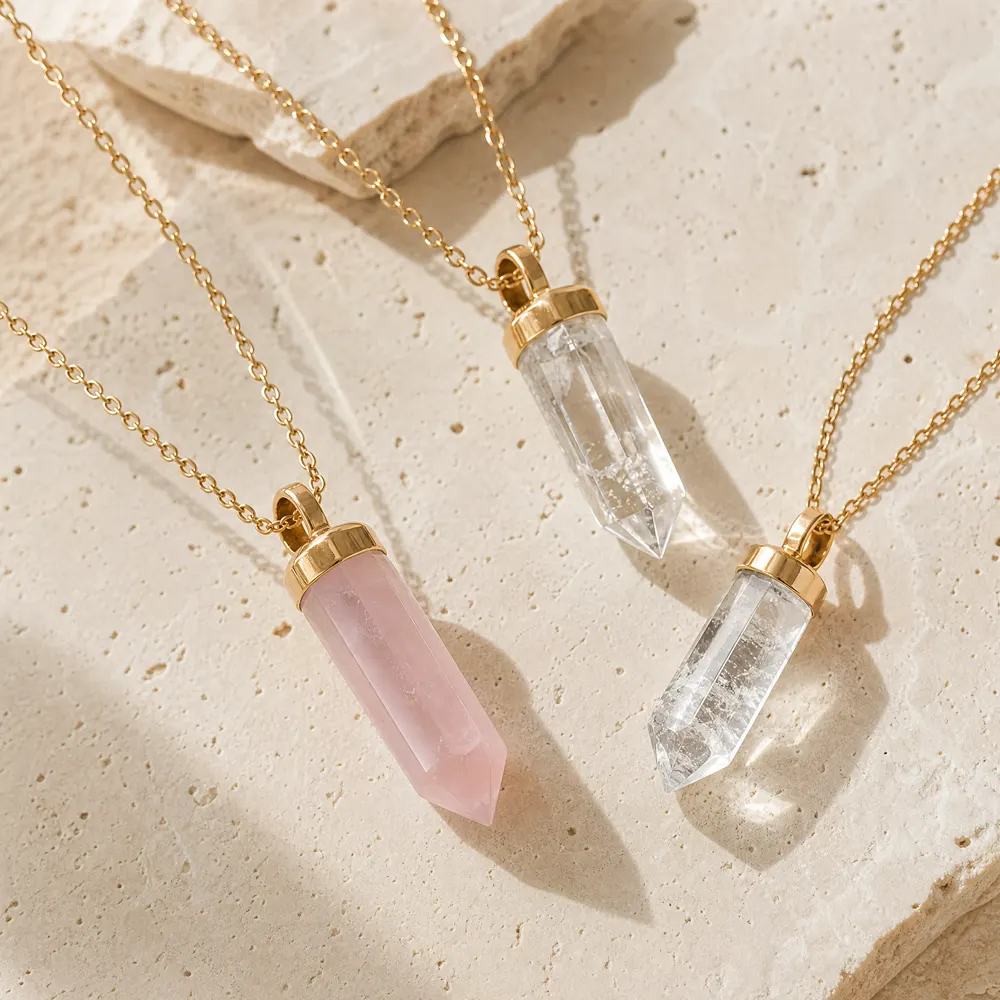
Use a controlled drawing or annotated image as the visual companion to the written brief. Mark the clasp, each extension stop, the pendant attachment point, the lowest point of the pendant, and any detachable parts. A product photo can explain appearance, but it is not a scale drawing or a substitute for a stated measurement method.
Buyer checklist
- Assign a buyer SKU, style name, revision number, and issue date.
- Define "wearable necklace length," "base-chain length," and "pendant overall drop" separately.
- Mark measurement endpoints on an annotated front-view image.
- State whether detachable pendants, charms, or extensions are included in each value.
2. Decide which dimensions belong in the brief
Use a decision table rather than a single length field. The required set depends on the construction and retail description, but each listed measure needs a definition. Record a dimension only once as the controlled source, then reuse that approved value in sampling, product information, and merchandising systems.
For a pendant with a bail, do not leave it unclear whether pendant height includes the bail. For an extension chain, record the base length and each selectable finished length instead of describing the item only as "adjustable." If the pendant is irregular, name the orientation used for width, height, and depth.
| Measure | Decision to record | Why it avoids ambiguity |
|---|---|---|
| Wearable necklace length | State clasp condition, endpoints, and whether the value is a closed circumference or an opened end-to-end measure. | Prevents a finished-wear length from being confused with chain-only length. |
| Base chain and extension | Record base chain length plus each selectable extension position; identify whether the terminal hardware is included. | Makes the advertised adjustment range traceable to physical stops. |
| Pendant overall drop | Define the upper attachment point and the lowest point; state whether the bail or connector is included. | Separates the hanging assembly from the pendant body. |
| Pendant body W × H × D | State the viewing orientation and whether protruding elements are included. | Creates a reproducible dimensional record for product data and sample checks. |
| Bail, connector, and opening | Specify internal opening, external dimensions, and intended chain compatibility only when those details are required and evidenced. | Reduces fit assumptions for interchangeable or detachable components. |
Buyer checklist
- Select the measures required for this exact construction rather than copying a generic template.
- Record pendant body height and overall drop as separate fields when a bail or connector is present.
- List extension stops individually when retail copy will state selectable lengths.
- Identify each dimension that must appear on the customer-facing product page.
3. Prescribe the unit, method, and tolerance—not just a target number
Choose one nominal master unit, normally millimetres for component dimensions, and specify any secondary retail unit separately. NIST lists 10 millimetres as 1 centimetre and states that one inch is exactly 25.4 mm. If inches are needed for a target market, calculate and round the secondary figure from the approved master value; do not allow independently rounded metric and inch specifications to become competing targets.
Describe how the item will be positioned and measured: for example, clasped or open, extension at a named stop, resting flat or gently aligned, and pendant freely hanging or laid to a defined orientation. Identify the instrument or resolution where material to acceptance. A tolerance is a negotiated approval criterion, not a universal jewelry constant; leave it subject to written quotation and approved sample when it has not been agreed.
Buyer checklist
- Name the master unit and any consumer-facing secondary unit.
- State the exact measurement condition for the chain, extension, and pendant.
- Request a proposed tolerance and measurement resolution instead of assuming one.
- Record the conversion and display-rounding rule for e-commerce data.
4. Make the brief usable for quotation, sampling, and incoming review
Put the operational fields in one version-controlled record: buyer SKU, visual reference, component-by-component dimensions, nominal values, tolerance status, units, method, date, owner, and approval state. Attach the supplier's completed measurement record to the sample review, rather than relying on an email statement that the piece is "to spec." This creates a clear comparison point without representing that a future production result has already been verified.
Keep factual product descriptions separate from dimensional instructions. For U.S. product descriptions, the FTC Jewelry Guides address disclosures for certain gemstone treatments and the use of gemstone terms; those claims require supporting product information and applicable review. A dimension brief cannot prove material, origin, treatment, or performance. Use only substantiated wording and keep evidence with the relevant product-information file.
Buyer checklist
- Ask for a completed sample-measurement record against the same revision you issued.
- Capture actual sample values separately from nominal requirements.
- Flag dimensions whose acceptance is pending an approved sample or written quotation.
- Keep descriptive material claims and their supporting records outside the measurement field unless verified documentation supports them.
5. Translate approved measures into retail and market documentation
After approval, map each controlled measure to the product page, line sheet, marketplace feed, care insert where relevant, and internal SKU record. Label measurements precisely—for example, "necklace length" and "pendant drop"—rather than presenting a single unqualified length. Do not turn a technical dimension into a universal fit or placement claim: body position varies by wearer, styling, and construction.
For consumer products made available in the EU, Regulation (EU) 2023/988 requires manufacturers to ensure products bear a type, batch, serial number, or other identification element, with packaging or an accompanying document used where size or nature does not allow it on the product. A measurement brief can reserve a field for the chosen identifier and its placement, but it does not determine the applicable legal route. Confirm market-specific product, labeling, language, customs, and safety obligations with the responsible economic operator or qualified adviser before release.
Buyer checklist
- Map the approved names and values to every retail-data destination.
- Use factual labels such as "base chain length" and "pendant drop" rather than fit promises.
- Reserve an identifier field and record where it will appear when applicable requirements call for product identification.
- Route consumer-facing material, treatment, and compliance wording for applicable review before publication.
6. Approve against a sample and control later changes
Approve a measurement brief only after the buyer has compared the completed record, annotated drawing, and physical or otherwise agreed sample. Record the revision approved, the sample identifier, date, approver, actual measurements, photographs for appearance reference, and any deviations accepted in writing. Photographs should support identification, not replace dimensional verification.
For a reorder, start from the last approved revision and issue a written change notice for any different chain length, extension stop, pendant body size, bail opening, hardware position, unit conversion, or consumer-facing rounding rule. If an amendment has not been documented, treat the prior approved brief as the reference rather than assuming a visual similarity means equivalence.
Buyer checklist
- Compare the sample to every required dimension and measurement condition.
- Record approvals, exceptions, and open items by revision number.
- Use an approved-sample reference only for the aspects expressly recorded as approved.
- Issue a new revision for every dimensional or wording change before reorder release.
- Store the signed-off brief, measurement record, and evidence with the SKU file.
Frequently asked questions
Should pendant length include the bail?+
It can, but only if the brief says so. Record pendant body height and overall drop as separate values when the bail or connector affects the worn length. Define the top and bottom endpoints on the annotated drawing.
What is the best way to state an adjustable necklace length?+
State the base-chain length, each physical extension stop or range as applicable, the clasp condition, and whether terminal hardware is included. Avoid an unqualified "adjustable" label when a retailer needs exact selectable lengths.
Should a buyer provide both millimetres and inches?+
Use one approved master value and add the other unit only where the retail market needs it. NIST states that one inch is exactly 25.4 mm; define the conversion and display-rounding rule so the two figures do not become separate manufacturing targets.
Can a product photograph serve as the necklace measurement specification?+
No. A photograph can show design intent and support sample identification, but it does not define endpoints, unit, measurement condition, tolerance, or actual value. Pair it with an annotated, version-controlled measurement brief and approved-sample record.
Conclusion
A useful pendant necklace measurement brief is a controlled decision record, not a generic size note. By distinguishing the finished necklace from its chain and pendant components, fixing units and endpoints, and linking approval to a measured sample, overseas buyers can make quotation review, retail data, and reorder control more consistent without making unsupported product or commercial claims.
Product category references
Explore relevant GemMira formats.
Next step
Move from general guidance to your specific brief.
For a GemMira wholesale, private-label, or custom inquiry, share the product category, market, material direction, and any available reference images. Commercial terms, final specifications, and sample options are confirmed in a quotation and approved pre-production sample. Email your requirements to info@gemmira.com.
Start an inquiry with this guide →Email info@gemmira.com