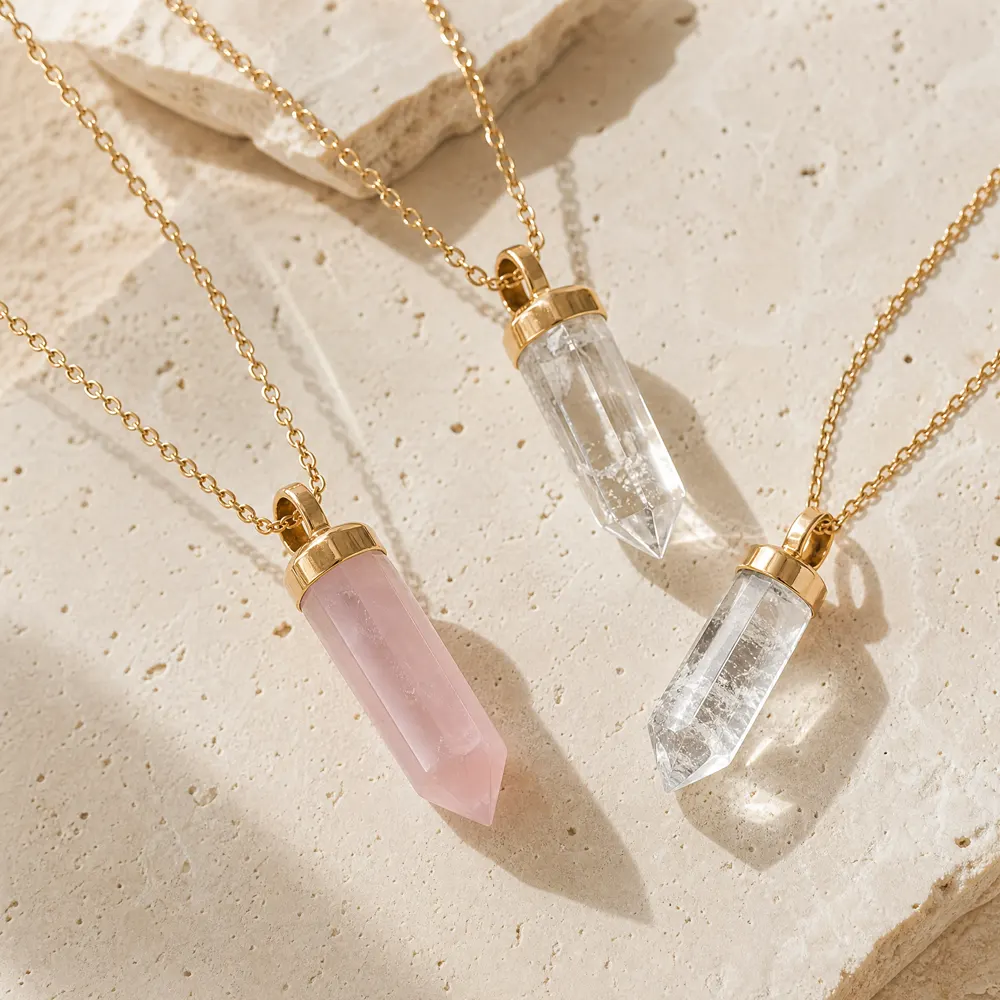
Answer first
Prepare the brief as a decision document, not a mood board. State the target market and selling moment, customer and price architecture, collection story, SKU roles, crystal and component requirements, product-information and claim boundaries, packaging and documentation needs, sample gates, and commercial questions requiring written quotation. For Europe, North America, and the Middle East, separate confirmed requirements from preferences and ask the sourcing partner to confirm unknown technical or commercial details against an approved sample and written quotation. [1] [2]
1. Define the seasonal decision
State whether the range supports holiday gifting, a resort capsule, an event-led drop, replenishment testing, or a broader seasonal refresh. Record the selling window, target channels, countries, customer, use occasion, and internal success measures.
Treat symbolic language as brand storytelling, not as a wellness, healing, medical or wellness outcome, medical, spiritual, energy, or feng-shui efficacy promise. The European Commission recommends checking product requirements, packaging and labelling rules, import conditions, and customs documents before sale [1].
| Input | Useful wording | Avoid |
|---|---|---|
| Role | Holiday gifting capsule for a curated boutique | A collection for everyone |
| Story | Colour-led styling supported by product facts | Crystal delivers healing or guaranteed energy |
| Scope | EU launch plus US and Gulf-market review | One global rule set |
Buyer checklist
- Selling moment and launch window recorded
- Target countries and channels identified
- Customer and use occasion stated
- Collection story separated from factual claims
- Regulatory owner named
2. Build the assortment architecture
Give every SKU a role such as entry, core, statement, gifting set, or add-on. Map families across earrings, pendants, bracelets, rings, and sets, then identify the visual codes that should repeat.
Include internal target retail or cost bands as planning inputs, but make clear that GemMira pricing, MOQ, capacity, lead time, and delivery are not confirmed until written quotation and approved sample review.
| Tier | Purpose | Question |
|---|---|---|
| Entry | Discovery or add-on | What keeps it easy to merchandise? |
| Core | Main commercial expression | Which colour, crystal, and finish define the family? |
| Statement | Visual anchor | What weight, scale, comfort, and display facts need checking? |
| Set | Gifting or coordinated purchase | Which pieces must match and how is the set labelled? |
Buyer checklist
- SKU families and roles listed
- Entry, core, and statement logic defined
- Matching-set logic identified
- Price bands labelled as assumptions
- Fixed requirements separated from approval-only alternatives
3. Write measurable specifications
For each SKU, identify product type, dimensions or ranges, crystal name for product data, colour, transparency, cut or shape, setting, findings, finish, closure, wearer-contact parts, and care information. Use annotated references, but do not let images replace written tolerances.
Ask the sourcing partner to state material identity, treatment or enhancement status, component composition, and available documentation. FTC guidance says treatments may require disclosure when they are not permanent, require special care, or significantly affect value [2]. GemMira commercial and technical details remain subject to written quotation, applicable requirements, documentation, and approved sample.
| Area | Record | Evidence |
|---|---|---|
| Crystal | Name, colour, cut, size, variation tolerance | Reference sample or written standard |
| Metal | Base material and finish | Supplier declaration and market review |
| Construction | Setting, bail, chain, clasp, cord, elastic, or post | Drawing and sample |
| Presentation | Care card, label data, packaging concept | Artwork approval and product data |
Buyer checklist
- SKU-level dimensions and tolerances listed
- Crystal and component terminology approved
- Treatment or imitation status requested where relevant
- Wearer-contact and care requirements identified
- Unknown supplier details left open for written confirmation
4. Set claims and product-information rules
Create one product-information block for quotations, line sheets, e-commerce, care cards, and customs files. Include confirmed product name, materials, dimensions, care limits, origin fields where required, SKU and barcode fields, and approval ownership.
The FTC says imitation or laboratory-created stones should be described clearly and relevant treatments disclosed. Use naming and disclosure as a release gate. Do not imply a mined, untreated, laboratory-created, wellness, healing, medical or wellness outcome, medical, spiritual, energy, or feng-shui status that has not been substantiated [2].
| Audience | Information emphasis | Owner |
|---|---|---|
| Retail buyer | Role, dimensions, finish, care, price inputs | Merchandising and sourcing |
| Consumer | Material, disclosures, care, safe-use information | Brand and compliance |
| Importer | Invoice, transport, origin, testing or certificates if applicable | Importer and customs partner |
| Supplier | Drawings, tolerances, references, change control | Product development |
Buyer checklist
- Factual product-data template agreed
- Crystal identity and treatment wording reviewed
- Care instructions match confirmed material
- Unsupported efficacy claims excluded
- Regional legal review assigned where needed
5. Define sample and change-control gates
Set approvals for concept, quotation, sample, and pre-release. Check appearance, dimensions, comfort, construction, finish, crystal variation, packaging, product data, and photography readiness.
Use one numbered comment log. Record the decision, approver, date, and affected SKU. Component, material, treatment, artwork, or packaging changes require written approval; do not treat silence as acceptance.
| Gate | Decision | Evidence |
|---|---|---|
| Concept | Proceed, revise, or stop | Approved concept board and SKU map |
| Quotation | Clarify or compare proposals | Written quotation and assumptions |
| Sample | Approve, revise, or reject | Dated comments and reference |
| Pre-release | Release data and artwork | Approved sample and change log |
Buyer checklist
- Sample stages and approvers named
- Review criteria measurable or illustrated
- Comments consolidated into one log
- Substitutions require written approval
- Approved sample and artwork versions identifiable
6. Add import and market-readiness questions
For EU programs, ask the importer or customs adviser to confirm product, packaging, labelling, origin, tariff, and documentation requirements. Depending on the goods and situation, the European Commission lists commercial invoices, transport documents, certificates of origin, test results, inspection certificates, and import declarations among possible import documents [1].
For North America and the Middle East, use a jurisdiction-by-jurisdiction checklist. Confirm label ownership, customs classification, language requirements, consumer product information, and any retailer-requested testing or documentation. GemMira packaging capability is subject to written quotation, applicable requirements, documentation, and approved sample.
| Market | Ask before release | Do not assume |
|---|---|---|
| Europe | Applicable product, label, packaging, and customs rules | One country review covers all destinations |
| North America | Federal, state, provincial, retailer, and claims requirements | Supplier wording is automatically compliant |
| Middle East | Destination-country language, import, and labelling rules | Regional preference replaces legal requirements |
Buyer checklist
- Destination countries and importer of record identified
- Customs and tariff questions assigned
- Labels, languages, and product data listed
- Packaging claims supported or removed
- Transport and documentation responsibilities reflected in contract terms
7. Finish with a supplier-ready control sheet
Include project code, date, target markets, SKU list, references, deliverables, open questions, approval gates, and response format. Ask the supplier to identify assumptions, exclusions, alternatives, and available documents. Request a line-by-line response so a mood board is not mistaken for an executable specification.
Keep the brief version-controlled. If the season changes, update selling-window and assortment logic without silently changing material, claims, or compliance requirements.
| Field | Supplier prompt |
|---|---|
| Quotation basis | Quote each SKU against the attached dimensions, finish, and approved reference. |
| Technical field | State proposed material, treatment status, and supporting documentation. |
| Alternative | Identify differences and wait for written approval. |
| Commercial unknown | Confirm MOQ, price, lead time, capacity, logistics, delivery, warranty, and packaging terms in writing if applicable. |
Buyer checklist
- Project code, owner, date, and revision recorded
- SKU matrix attached
- References and written specifications aligned
- Commercial and technical questions visible
- Supplier response format and approval gates stated
- Final brief archived with approved sample and product data
Frequently asked questions
What is the most important part of a crystal jewelry seasonal collection brief?+
The decision framework: target market and selling moment, SKU roles, measurable product requirements, product-information boundaries, approval gates, and open questions. It should tell a sourcing partner what is fixed, what can vary, and what must be confirmed in writing.
Should a seasonal brief include a target price?+
Yes, include an internal target retail or cost band as a planning input. Supplier pricing, MOQ, lead time, capacity, logistics, delivery, warranty, and packaging terms remain subject to written quotation, applicable requirements, documentation, and approved sample.
How should buyers handle crystal treatments or imitation materials?+
Request material identity and treatment or enhancement status in the technical response. Use market-appropriate naming and disclosure, link care instructions to confirmed material, and do not imply mined, untreated, or laboratory-created status without substantiation.
Can a collection theme mention energy, healing, or feng shui?+
It may be presented as aesthetic, cultural, or editorial storytelling, but should not make or imply wellness, healing, medical or wellness outcome, medical, spiritual, energy, or feng-shui efficacy claims. Route consumer-facing language through legal or compliance review.
Conclusion
A strong crystal jewelry seasonal collection brief gives every participant the same decision record: why the range exists, who it serves, what each SKU must be, what evidence and product information are needed, and when approval is complete. Keep unknowns explicit, use written quotation and approved samples as release points, and adapt the compliance handoff to each destination market.
Product category references
Explore relevant GemMira formats.
Next step
Move from general guidance to your specific brief.
For a GemMira wholesale, private-label, or custom inquiry, share the product category, market, material direction, and any available reference images. Commercial terms, final specifications, and sample options are confirmed in a quotation and approved pre-production sample. Email your requirements to info@gemmira.com.
Start an inquiry with this guide →Email info@gemmira.com