Answer first
Document finish as an observable, sample-controlled specification rather than as a general promise of quality. For every SKU, identify the crystal surface treatment or polish, the intended luster, acceptable inclusions and surface marks, facet and edge condition, metal or coating finish, lighting and viewing method, reference images, defect limits, and the approval sample or sealed reference. Record what is known, what must be confirmed, and what requires written quotation or applicable market documentation. A clear crystal jewelry finish specification lets retailers, brands, importers, and sourcing partners compare samples and inspect production without relying on subjective words such as premium, flawless, or high quality. [1] [2]
1. Start with an appearance brief that can be inspected
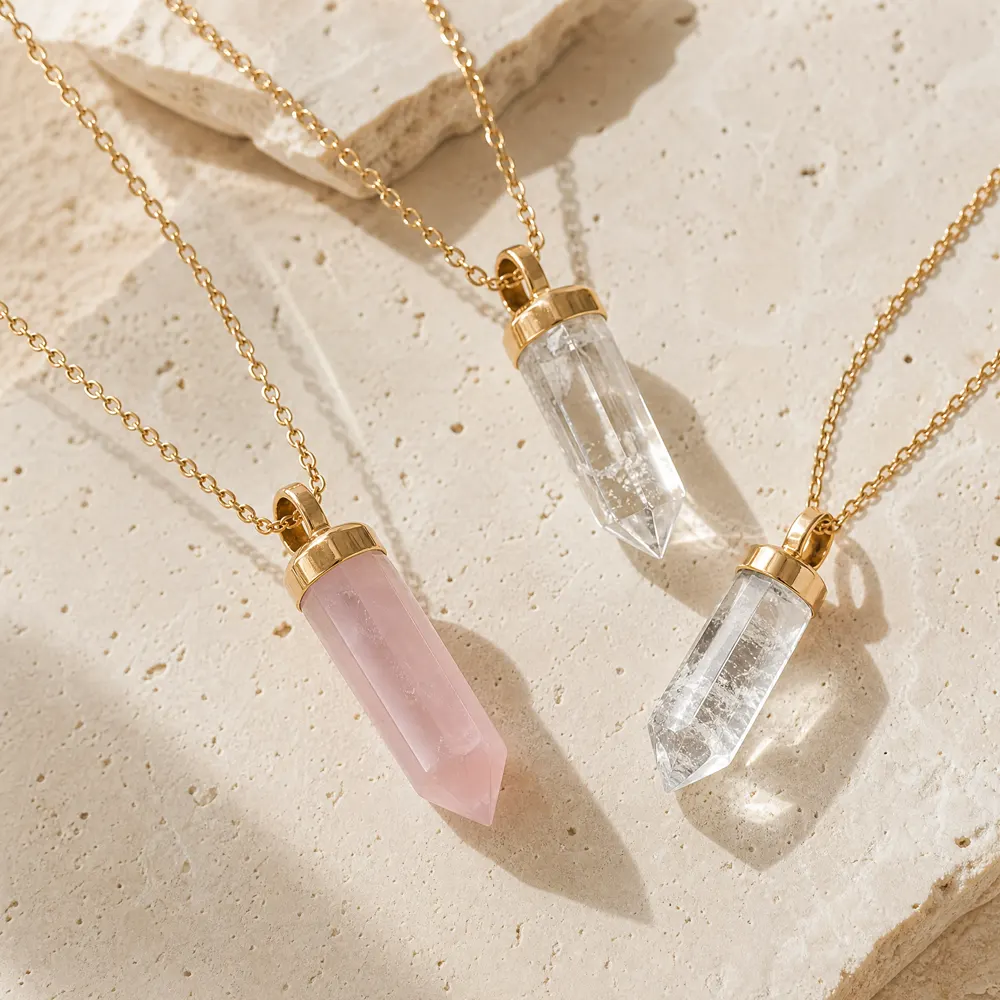
Separate appearance into the crystal, the setting, and any metal, coating, plating, paint, or adhesive that is visible in the finished piece. State the intended look in neutral terms: for example, polished and reflective, softly translucent, matte, frosted, faceted with crisp edges, or deliberately organic. Do not use a treatment, origin, durability, or performance term unless the supplier provides appropriate written evidence.
A finish specification should also name the viewing conditions. Record whether approval is made under diffuse daylight, a defined retail-lighting simulation, or another agreed setup; whether the piece is viewed at normal display distance or under magnification; and whether front, back, edge, and setting areas are included. The purpose is repeatable observation, not a universal visual standard.
GIA explains that gem treatments can change apparent clarity, appearance, or stability, and that some filled or impregnated materials need special care. Therefore, a visible result should not be used to infer that a crystal is untreated, natural, durable, or suitable for every use. Ask for treatment and care information separately from the visual finish description.
Buyer checklist
- Assign a finish description to each SKU, component, and visible surface.
- State viewing distance, lighting, orientation, and whether magnification is used.
- Define which appearance terms are descriptive only and which require supporting documentation.
- Link the description to a dated sample, photograph set, or retained reference.
2. Describe the crystal surface using observable attributes
Use a short attribute set that a buyer and supplier can interpret in the same way. Useful fields include surface smoothness, polish or luster, transparency or translucency, facet definition, edge sharpness, surface-reaching marks, chips, pits, scratches, cloudy areas, color distribution, and intentional natural variation. Describe location and visibility instead of writing only acceptable or unacceptable.
For example, a brief can distinguish a permitted internal inclusion from a chip at a facet junction, or a natural color zone from an unintended stain. If variation is part of the product concept, show representative low, typical, and high examples rather than promising visual uniformity. The examples should be tied to the same SKU and material description.
Avoid converting a photograph into a guarantee. A photograph can support color and overall appearance review, but it may not reveal small edge damage, surface-reaching fractures, coating discontinuity, or changes caused by lighting and camera processing. Use physical sample review and written criteria for release decisions.
| Attribute | Document this | Buyer decision |
|---|---|---|
| Polish and luster | Reflective, satin, matte, frosted, or other agreed appearance; note visible haze or drag marks | Approve the intended visual effect and reject unintended dull patches |
| Facet and edge condition | Facet alignment, edge definition, points, corners, and visible chips | Set location-based limits for damage that affects display appearance |
| Clarity and inclusions | Internal inclusions, cloudy zones, surface-reaching features, and intentional variation | Separate characteristic material variation from workmanship defects |
| Color appearance | Body color, zoning, contrast, and lighting used for review | Approve representative range rather than relying on one edited image |
| Surface marks | Scratch, pit, abrasion, residue, or other mark; visibility and location | Classify as permitted, reworkable, or rejectable |
3. Cover the metal and setting finish separately
The crystal can meet its appearance brief while the finished jewelry still fails because of visible setting or metal-finish issues. Add fields for metal color, brightness or sheen, brush direction if relevant, plating or coating appearance, exposed base material, burrs, tool marks, solder visibility, prong or bezel alignment, adhesive squeeze-out, and contact marks. These are product attributes to be reviewed; they are not evidence of a particular metal grade, plating thickness, or regulatory status.
Where a buyer requires a named metal, coating, or surface process, request the supplier's written material and process description and any market-specific evidence needed by the buyer. Do not assume that a color name proves composition or that a shiny appearance proves durability. Unknown GemMira commercial and technical details remain subject to written quotation, applicable requirements, documentation, and approved sample.
For settings, explain which areas are customer-facing and which are hidden during normal wear. A small mark inside a concealed setting may be handled differently from a scratch on a pendant face, but the rule should be written before inspection.
Buyer checklist
- Specify crystal, setting, and metal or coating appearance in separate fields.
- Identify customer-facing zones and concealed zones.
- Ask for written confirmation of any named material or finish process required for sale.
- Do not infer composition, treatment status, or durability from color or shine alone.
4. Turn visual preferences into acceptance and comparison rules
A useful inspection rule combines defect type, location, visibility, quantity, and disposition. For instance, a brief can require that customer-facing crystal facets be free of visible chips at normal viewing distance, while allowing documented internal inclusions that match the approved range. The exact limits should be negotiated for the product and recorded in the purchase specification; this article does not assign GemMira tolerances.
Use a comparison table when evaluating samples from suppliers or reviewing a pre-production sample against a golden reference. Score the same attributes in the same order. If a difference is caused by material variation rather than workmanship, label it as such and decide whether the range is commercially acceptable.
Do not use inspection language to make unsupported wellness, healing, energy, medical, or feng-shui claims. Finish documentation should describe physical appearance and workmanship only.
| Decision area | Compare | Record |
|---|---|---|
| Crystal surface | Polish, luster, haze, scratches, pits, chips | Pass, rework, hold, or reject with location and image |
| Natural variation | Color zones, inclusions, pattern, transparency | Within approved range or outside range |
| Setting workmanship | Alignment, burrs, adhesive, exposed base material | Defect class and affected component |
| Finish consistency | Left/right pair, multi-piece set, and SKU-to-SKU appearance | Pairing or batch decision with reference |
| Documentation | Sample, photos, material and treatment statements | Document ID, date, reviewer, and open questions |
5. Build a sample and image record that survives handover
Keep one approved physical reference where practical and identify it with SKU, version, date, and reviewer. Pair it with uncropped images of the front, back, side, setting, clasp or attachment areas, and any intentionally varied surfaces. Add close-ups for the features that matter most, while preserving a normal-view image so the record reflects retail presentation.
A handover pack should connect the approved reference to the purchase order, technical drawing or product data sheet, inspection checklist, and any supplier change-notification process. If a supplier proposes a different crystal, coating, adhesive, polishing route, or component, require a new appearance review rather than assuming equivalence.
For online listings, select images that represent the approved commercial appearance and write consumer-facing copy conservatively. FTC guidance says jewelry and gemstone descriptions should be truthful and non-deceptive; a finish image should not imply a material, treatment, origin, or performance fact that has not been established.
Buyer checklist
- Assign a version and date to every approved sample and image set.
- Capture normal-view and close-up images without replacing physical review.
- Cross-reference the appearance record with the PO and technical file.
- Require re-approval after a material, process, or component change.
6. Adapt the record for cross-border retail and importer review
European, North American, and Middle Eastern buyers may share the same visual brief while applying different product-information, advertising, import, and safety requirements. Treat the finish specification as one part of the product file. Keep separate fields for composition, treatment or enhancement disclosure, care, country-of-origin or customs information, responsible economic operator details where applicable, and market-specific claims review.
For EU-facing programs, confirm current obligations with the responsible importer or compliance adviser. The European Commission identifies product safety as a framework for consumer products, and the EU General Product Safety Regulation is relevant to products sold to consumers, including online channels. A finish record can support traceability and listing accuracy, but it does not replace a legal safety assessment or other required documentation.
For North American and Middle Eastern launches, apply the buyer's destination-market rules and retailer policy. Ask the supplier to provide only documents that are actually available and relevant. If GemMira's commercial or technical detail is not stated in writing, treat it as unknown and resolve it through quotation, applicable requirements, documentation, and approved sample.
Buyer checklist
- Map appearance records to each destination market's product-information workflow.
- Separate visual description from composition, treatment, care, and legal claims.
- Have the importer or compliance owner confirm applicable local requirements.
- Archive the evidence used to approve listings and purchase releases.
Frequently asked questions
What is the most important field in a crystal jewelry finish specification?+
The most important field is an agreed, observable acceptance description tied to a physical sample or reference image set. It should state the intended crystal and setting appearance, viewing conditions, visible zones, permitted variation, defect limits, and release decision.
Should buyers specify a gloss level or numerical surface measurement?+
Only when the product, measurement method, and supplier capability make that control meaningful. Many retail appearance decisions are better supported by controlled lighting, representative samples, and location-based visual criteria. If a numerical test is required, document the instrument, method, reference, and acceptance range in writing rather than inventing a value.
Does a polished appearance prove that a crystal is untreated or natural?+
No. Polish and luster describe appearance, not material origin or treatment status. GIA documents treatments that can improve apparent clarity or appearance, so buyers should request separate material and treatment information and avoid making unsupported claims.
What should a buyer do when a production sample differs from the approved sample?+
Place the item on hold, photograph the difference under the agreed viewing conditions, identify the affected attribute and location, and compare it with the written acceptance rule. Then request a documented disposition, corrective sample, or buyer-approved change before releasing the order.
Conclusion
A strong crystal jewelry finish specification makes appearance review repeatable without pretending that every natural or crafted surface can be identical. Define the crystal and setting separately, use observable attributes, show representative variation, establish location-based acceptance rules, retain an approved sample, and keep visual evidence connected to the product file. Use written supplier documentation for any material, treatment, process, regulatory, or performance statement, and treat unconfirmed GemMira details as subject to written quotation, applicable requirements, documentation, and approved sample.
Product category references
Explore relevant GemMira formats.
Next step
Move from general guidance to your specific brief.
For a GemMira wholesale, private-label, or custom inquiry, share the product category, market, material direction, and any available reference images. Commercial terms, final specifications, and sample options are confirmed in a quotation and approved pre-production sample. Email your requirements to info@gemmira.com.
Start an inquiry with this guide →Email info@gemmira.com